
CRM Systems Salesforce and How All-in-One Platforms Compare
Last updated September 20, 2026
CRM systems are software platforms that manage customer interactions and data throughout the entire customer lifecycle, from first contact to post-sale support. Salesforce is the leading CRM provider globally, offering a modular suite of products including Sales Cloud, Service Cloud, Marketing Cloud, and Commerce Cloud, each addressing different business functions across sales, service, marketing, and commerce teams.
Table of contents
- Key takeaways
- What CRM Systems Are and Why They Matter
- What Makes Salesforce CRM the Leading Platform
- How Salesforce Works Across Different Teams
- How Can I Manage All My Business Tools in One Platform
- How Can I Improve My Lead Response Time
- How Can AI Automate My Customer Interactions
- Comparing Salesforce and All-in-One CRM Platforms
- When Salesforce Is the Wrong Choice and What to Consider Instead
- How Launch CRM Simplifies What Salesforce Makes Complex
- Making the Right CRM Choice for Your Business in 2026
- Frequently asked questions
- Take control of your customer relationships in 2026
Key takeaways
- Salesforce CRM is consistently ranked as the #1 CRM globally with separate cloud products for sales, service, marketing, and commerce.
- All-in-one CRM platforms consolidate marketing, sales, customer service, and AI automation into a single login, reducing software sprawl.
- AI-powered CRM systems automate lead response, customer interactions, and workflow tasks through specialized AI agents and employees.
- Launch CRM's AI agent Rocket responds to leads in under 60 seconds and handles phone calls, appointments, and review posting automatically.
- Modular CRM ecosystems like Salesforce require multiple integrations while unified platforms streamline workflows with consolidated functionality.
What CRM Systems Are and Why They Matter
Customer Relationship Management (CRM) software centralizes customer interactions and data throughout the customer lifecycle, from initial contact through sales, service, and retention. These platforms give every team member the same complete customer picture by consolidating customer information, communication history, purchase records, and interaction data in one accessible location.
Modern CRM systems automate repetitive tasks that drain productivity: data entry, follow-up emails, appointment scheduling, and lead assignment. By handling these mechanical processes, teams spend more time building relationships and less time clicking through screens. The automation runs continuously so no lead sits unattended overnight or during busy periods.
Today's platforms integrate with email, phone, text messaging, social media, websites, and analytics tools to capture every customer touchpoint. When a prospect fills out a website form, opens an email, calls your office, or messages you on Facebook, the CRM logs it automatically. That unified timeline means sales reps walk into conversations informed and service teams see the full history before addressing an issue.
The business value shows up in measurable outcomes: improved lead response time (often from hours to minutes), higher conversion rates (because fewer leads fall through cracks), better customer retention (service teams resolve issues faster with complete context), and data-driven decision-making across sales, marketing, and service teams. Companies using CRM report knowing which marketing channels deliver quality leads, which sales tactics close deals, and which service issues predict churn.
Understanding the foundational cloud technology that powers these systems helps explain why modern CRM platforms deliver real-time access and seamless updates across teams.
What Makes Salesforce CRM the Leading Platform
Salesforce CRM, dominating the market through its comprehensive feature set, scalability, and ecosystem reach. The platform's modular architecture offers a suite of products called "Clouds," each designed for specific business functions: Sales Cloud, Service Cloud, Marketing Cloud, Commerce Cloud, and Analytics Cloud (Tableau).
Sales Cloud delivers sales force automation, pipeline management, sales performance management, and CPQ (Configure, Price, Quote) for generating accurate quotes. Revenue lifecycle management tracks deals from prospect to close. Forecasting tools predict quarterly performance based on pipeline velocity and historical patterns. Sales teams build custom workflows, automate follow-up sequences, and collaborate on complex deals through integrated workspaces.
Service Cloud handles customer service management, field service dispatch, contact center operations, IT service management, and agentic self-service options that let customers resolve common issues without human intervention. Case routing directs support tickets to agents with the right skills, while knowledge bases surface relevant articles during conversations. Service level agreements (SLAs) trigger escalations automatically when resolution times exceed targets.
Marketing Cloud personalizes and automates customer communications across email, SMS, social media, and digital advertising for both B2C and B2B marketing teams. Journey Builder maps multi-touch campaigns that respond to customer behavior in real time, sending the next message based on whether someone opened the last email or clicked a specific link. Audience segmentation splits contacts by demographics, behavior, and predicted lifetime value.
Commerce Cloud powers B2C and B2B e-commerce experiences, managing product catalogs, processing transactions, and fulfilling orders through integrated logistics. Tableau provides data analysis and visualization for business intelligence, turning raw CRM data into executive dashboards and trend reports. The platform integrates with Slack for team collaboration, letting sales and service teams coordinate in real time without leaving their CRM screens.
Agentforce, Salesforce's AI initiative, combines human and AI agents for customer success, automating insights and interactions across the platform. The AI surfaces next-best actions for sales reps, predicts which leads are most likely to convert, and generates response suggestions for service agents. Trailhead, Salesforce's online learning platform, offers modules and certifications that help users master the system's depth.
How Salesforce Works Across Different Teams
Sales teams use Salesforce to track leads, manage pipelines, forecast revenue, automate follow-ups, and collaborate on deals through Sales Cloud. Reps log every call, email, and meeting in one place so managers see real-time pipeline health and can coach based on actual activity rather than estimates. Automated lead scoring ranks prospects by engagement level, directing attention to the warmest opportunities first.
Marketing teams leverage Marketing Cloud to segment audiences, run multi-channel campaigns, track engagement metrics, and score leads based on behavior before passing them to sales. A prospect who downloads three whitepapers and attends a webinar gets a higher score than someone who opened one email, triggering an alert for sales to reach out. Campaign attribution tracks which marketing touches influenced closed deals, proving ROI for every channel.
Service teams manage support tickets, route cases to specialized agents, track resolution times, and maintain customer satisfaction scores through Service Cloud. When a customer calls in, the agent sees open cases, recent purchases, and previous complaints in one screen. Post-resolution surveys measure satisfaction automatically, flagging accounts at risk of churn for account managers to address.
Commerce teams use Commerce Cloud to create personalized shopping experiences, manage product catalogs, process transactions, and fulfill orders. Product recommendations adjust based on browsing history and past purchases, while abandoned cart emails recover revenue automatically. Inventory management syncs stock levels across channels, preventing overselling.
Analytics teams build dashboards with Tableau, visualize trends, and generate reports that inform strategy across all departments. Executives track quarterly goals, regional managers compare territory performance, and individual reps monitor their own conversion rates. The customization and scalability allow businesses to adapt the platform to specific needs and grow with it as operations expand.
How Can I Manage All My Business Tools in One Platform
Unified platforms like Launch CRM consolidate CRM, marketing automation, sales funnels, email and SMS campaigns, appointment booking, reputation management, and AI agents into a single login. This replaces 5 to 12 separate tools that most businesses juggle. The consolidation eliminates the daily frustration of switching between tabs, remembering multiple passwords, and reconciling data that lives in different systems.
The problem with modular ecosystems is integration complexity. Salesforce's approach requires purchasing separate Clouds (Sales, Service, Marketing, Commerce), each with its own interface, learning curve, and potentially disparate data, plus third-party integrations for functions not covered natively. A business wanting complete marketing automation needs Marketing Cloud. If they also want advanced analytics they add Tableau. For team collaboration they integrate Slack. Each addition multiplies complexity.
All-in-one platforms take the opposite approach. Launch CRM combines customer management, web chat, missed call text back, GMB messaging, forms, surveys, webinars, social media DM management, workflows, email marketing, sales funnels, SMS marketing, memberships, quizzes, pipelines, invoicing, documents, contracts, text-to-pay, and booking calendars in one system. That means one data model, one support team to call, one set of user permissions to manage, and one monthly bill to pay.
Businesses typically reduce monthly software costs by 40-60% when they replace multiple subscriptions with a single all-in-one platform. Beyond cost, they eliminate hours spent exporting data from tool A to import into tool B, training staff on six different interfaces, and troubleshooting why the integration between two apps broke overnight. One login means your marketing automation knows what your sales pipeline shows, and your customer service history informs your email campaigns automatically.
Key insight: Businesses that replace 5 to 12 separate tools with an all-in-one CRM platform typically reduce monthly software costs by 40-60% while improving team productivity and data consistency.
Workflow simplification extends to reporting. Instead of pulling data from five dashboards to calculate true cost per lead, you see it in one consolidated view that updates in real time. The efficiency gain compounds across every process that previously required switching tools or reconciling data.
How Can I Improve My Lead Response Time
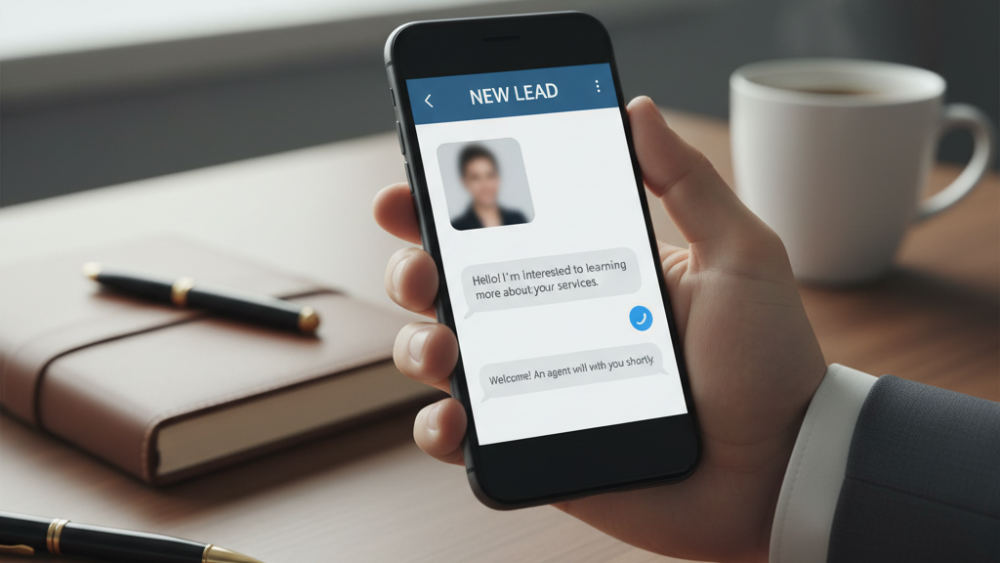
AI automation for lead response can cut reply time from hours to under 60 seconds, with Launch CRM's AI agent Rocket automatically responding to new leads via text, email, or phone call the moment they arrive. This speed advantage converts more leads because prospects are still engaged when you reach them, not exploring competitors hours later.
Studies show that responding to a lead within the first five minutes increases conversion likelihood by 21 times compared to waiting 30 minutes, yet most businesses take hours or even days to reply. The delay isn't intentional. Leads arrive during nights, weekends, or when staff are already on calls. By the time someone checks the inbox, the prospect has moved on.
Practical rule: Responding to a lead within the first five minutes increases conversion likelihood by 21 times compared to waiting 30 minutes, which is why AI-powered lead response is now table stakes for competitive businesses.
Rocket monitors all lead sources around the clock: website forms, social media messages, GMB inquiries, and phone calls. When a lead arrives, the AI sends a personalized first message within seconds, answers common questions via text or live phone conversation, qualifies the lead by asking screening questions, and either books an appointment directly into your calendar or alerts a human team member to take over. The conversation feels natural because the AI understands context and responds conversationally, not with robotic scripts.
Manual follow-up creates gaps that lose revenue. A lead fills out a form at 9 PM, sits in your CRM queue overnight, and by 10 AM when your team starts calling they've already scheduled appointments with two competitors who responded instantly. Automation closes that gap so every lead gets immediate attention regardless of when they reach out.
The business impact extends beyond conversion rates. Faster response time improves customer perception of responsiveness and professionalism, increases appointment show rates (people who book sooner show up more reliably), and reduces the total number of touches needed to close a deal because the relationship starts while interest is highest. For businesses deploying conversational AI technology, the competitive advantage is measurable and immediate.
How Can AI Automate My Customer Interactions
AI automates customer interactions by handling routine conversations via chatbot, text, email, and voice calls. It qualifies leads, answers frequently asked questions, books appointments, sends follow-ups, and escalates complex issues to human team members only when necessary. AI-powered platforms analyze customer behavior to predict next actions, personalize message content based on past interactions, schedule outreach at optimal times, and surface insights about which customers need attention. These capabilities let businesses maintain 24/7 availability without staffing a full team around the clock, while humans focus on high-value conversations that require expertise or empathy.
Launch CRM's AI Employee Suite provides six specialized AI teammates that work together inside the same platform: Conversation AI for chat and messaging, Voice AI for phone calls, Reviews AI for reputation management, Content AI for generating marketing copy, Funnel AI for optimizing sales journeys, and Workflow AI for automating multi-step processes. Each AI is pre-trained for its specific task. A lead captured by Conversation AI can be called by Voice AI, booked into the calendar, added to a nurture funnel by Funnel AI, and followed up by Workflow AI without any manual handoffs or data transfers between systems.
Salesforce's Agentforce initiative combines human and AI agents for customer success across its ecosystem but requires configuration across multiple Clouds and often needs partner tools or custom development to achieve end-to-end automation. Where Salesforce delivers AI insights and recommendations that human users act on, Launch CRM's AI teammates execute the actions themselves: calling leads, posting reviews, sending messages, updating records, and moving prospects through the pipeline while you sleep.
The advantage of dedicated AI agents lies in their readiness. Launch CRM customers activate the AI Employee Suite and see results within hours, not months. Rocket starts responding to leads immediately, Voice AI begins handling inbound calls as a virtual receptionist, and Reviews AI monitors your reputation sites without setup delays. Salesforce's AI power is undeniable, but harnessing it requires technical knowledge, consultant hours, and integration work that many small to medium-sized businesses cannot justify.
Practical automation means a prospect lands on your website at midnight, chats with Conversation AI about your services, receives a text confirmation when Voice AI calls them the next morning, books an appointment through the automated scheduler, gets an email reminder with a video introduction generated by Content AI, and after the appointment receives a text asking for a review that Reviews AI posts to your Google profile. Every touchpoint is personalized, every conversation is logged, and no human lifted a finger until the actual appointment.
Comparing Salesforce and All-in-One CRM Platforms
Salesforce excels at enterprise-scale customization and offers best-in-class depth in each Cloud, but businesses often struggle with complexity, cost, and the need to integrate and manage multiple systems that live in different interfaces with different logins and different data models. Launch CRM consolidates the essential CRM, marketing, sales, service, and AI functions that most small to medium-sized businesses need into a single system with one interface, one data model, and one monthly cost. This eliminates the integration tax that Salesforce users pay in time and money.
Salesforce requires Sales Cloud for pipeline management, Marketing Cloud for email campaigns, Service Cloud for support tickets, plus integrations for SMS, appointment booking, and reputation management. Launch CRM includes all these features natively, along with sales funnels, webinars, memberships, invoicing, and text-to-pay. Where Salesforce users log into Sales Cloud to update a deal, switch to Marketing Cloud to send an email, open a third-party tool to schedule an appointment, and check a separate dashboard for reviews, Launch CRM users do all of it from one screen.
AI capabilities differ fundamentally in approach. Salesforce's Agentforce provides AI insights and automation across its ecosystem, suggesting next best actions, forecasting revenue, and surfacing customer sentiment from support tickets. But making Agentforce work requires configuration, custom development, and often hiring a certified partner to map workflows across multiple Clouds. Launch CRM's Rocket and AI Employee Suite are turnkey AI agents that start working immediately to respond to leads, make calls, book appointments, generate content, and post reviews (no coding or consultant fees required).
Cost and complexity escalate together in the Salesforce ecosystem. Entry-level Sales Cloud starts affordably, but adding Marketing Cloud, Service Cloud, additional user licenses, and third-party integrations for phone, SMS, and appointments can push monthly costs into thousands of dollars before a business reaches 50 employees. Launch CRM offers transparent flat-rate pricing that includes the full platform and all six AI teammates with no surprise charges for adding features or scaling usage.
The learning curve reflects the system's complexity. Salesforce offers Trailhead for training and certifications, which signals the depth of knowledge required to configure dashboards, build custom objects, design automation rules, and integrate partner apps. New users spend weeks learning the system, and many businesses hire full-time Salesforce administrators to manage it. Launch CRM simplifies workflows so new users navigate the system intuitively, reducing training time from weeks to days and support tickets from daily to rare.
Target audience fit explains why both platforms thrive. Salesforce serves enterprises with complex processes, large teams, dedicated IT staff, and budgets for customization, where the flexibility to build a fully tailored ecosystem justifies the investment. Launch CRM targets small to medium-sized businesses that want to eliminate software sprawl, automate growth without hiring IT specialists, and see ROI within weeks rather than quarters. Neither platform is universally better; they solve different problems for different audiences.
When Salesforce Is the Wrong Choice and What to Consider Instead
Small teams with fewer than 50 people that don't need the full breadth of Sales, Service, Marketing, and Commerce Clouds often pay for features they'll never use and spend more time configuring the system than using it to serve customers. Salesforce's modular design makes sense for enterprises that need Marketing Cloud's advanced segmentation or Service Cloud's field service dispatch, but small businesses seeking basic CRM, email automation, and appointment booking end up overwhelmed by options they don't require.
The risk of software sprawl grows as Salesforce users add integrations to fill gaps. Need SMS marketing? Add Twilio or another messaging platform. Want appointment scheduling? Integrate Calendly or Acuity. Looking for review management? Subscribe to Podium or BirdEye. Each integration creates another login, another monthly cost, another data sync to monitor, and another potential failure point when systems don't communicate correctly. Before long, what started as a CRM becomes a patchwork of tools that require a spreadsheet to track.
Watch out: Salesforce's ecosystem can create software sprawl as businesses add Clouds and integrations, often pushing monthly costs into thousands of dollars and requiring dedicated CRM administrators to manage complexity.
Entry-level Salesforce plans appear affordable until businesses add the features they actually need. Marketing Cloud alone can cost more per month than an entire all-in-one platform, and adding Service Cloud, advanced automation, and user licenses for a growing team pushes monthly costs into territory that makes sense only for businesses generating significant revenue per employee. Small businesses with tight margins find themselves locked into costs they cannot sustain without reducing headcount or sacrificing other investments.
Salesforce customization often requires hiring a certified consultant or dedicating internal staff to months of setup. The platform's power is its flexibility, but flexibility means decisions: which objects to create, which workflows to automate, which integrations to enable, how to structure reports. Many small businesses delay launch by months while they configure dashboards, test automations, and train staff. This delays ROI and creates dependency on specialized knowledge that walks out the door if that key person leaves.
Businesses focused on lead generation, customer communication, and rapid growth benefit more from a platform that works out of the box. Launch CRM delivers automated lead response, AI-powered calling, funnel building, email and SMS marketing, appointment booking, and review management on day one (without consultants or custom development). Where Salesforce asks "What do you want to build?" Launch CRM asks "What do you want to achieve?" and provides the tools to do it immediately.
Migrating data and workflows from Salesforce to a simpler platform requires planning, but businesses that make the switch typically see immediate improvements in team adoption, workflow speed, and cost savings. Contacts, deals, and historical data import into Launch CRM. Workflows that required three integrations in Salesforce run natively in one system, eliminating the friction that slowed daily operations.
How Launch CRM Simplifies What Salesforce Makes Complex
Launch CRM replaces the separate Clouds, integrations, and partner tools that Salesforce users cobble together, offering a single platform where CRM, marketing automation, sales funnels, AI agents, appointment booking, invoicing, and reputation management work together seamlessly under one login with one data model. Rocket, the AI agent, answers new leads in under 60 seconds via text or phone, qualifies prospects by asking custom questions you define, books appointments directly into the calendar based on your availability, and even posts positive reviews automatically after a successful interaction. These tasks would require integrating Salesforce with a chatbot service, a calling platform, a scheduling tool, and a reputation management subscription (each adding cost and complexity).
Sales funnel and email marketing capabilities live natively inside Launch CRM. The drag-and-drop funnel builder creates landing pages, opt-in forms, upsell sequences, membership sites, and checkout pages without third-party funnel software. Email and SMS campaign tools let you design messages, automate sequences triggered by customer actions, segment audiences by behavior or demographics, and track opens, clicks, and conversions in the reporting dashboard. Salesforce users need Marketing Cloud for email automation and a separate tool like ClickFunnels or Leadpages for funnels (each requiring integration and separate billing).
Voice AI handles inbound and outbound calls as a virtual receptionist that works 24/7. Inbound calls are answered with a custom greeting, asked qualifying questions, and routed to the appropriate team member or voicemail based on business hours and availability. Outbound calls go to leads who submitted forms, introducing your business, answering common questions using natural conversation, and booking appointments into the calendar. After every call, the AI logs a conversation summary, updates the contact record, and triggers follow-up workflows automatically so no lead falls through the cracks. Salesforce users typically integrate Aircall, RingCentral, or another phone system, then build custom workflows to log calls and trigger actions (adding setup time and monthly costs).
The reporting dashboard consolidates lead sources, conversion rates, campaign performance, revenue, appointment show rates, pipeline stages, and customer activity into one view with filters by date range, campaign, team member, or segment. Salesforce users often export data to Tableau or another analytics tool to unify metrics across Sales Cloud, Marketing Cloud, and Service Cloud, since each Cloud tracks different data sets in different dashboards. Launch CRM's reporting updates in real time, eliminating the export, transform, and reload cycles that Salesforce ecosystems require to answer basic questions like "What did this campaign cost per customer?"
Reviews AI monitors Google, Facebook, and industry-specific review sites, alerting the team to new reviews and sentiment changes. After a positive interaction or completed service, the platform sends automated text or email requests prompting satisfied customers to leave reviews. Rocket can post positive reviews automatically to your profiles and surface negative reviews for immediate human response, helping businesses maintain reputation and respond quickly to feedback. Salesforce users subscribe to Trustpilot, Podium, or another reputation platform, integrating review alerts into Service Cloud and manually managing responses (adding another tool and another cost).
Implementation speed separates the two platforms. Launch CRM customers import contacts from a CSV file, set up workflows using visual automation builders, activate AI agents with toggle switches, and launch email or SMS campaigns using pre-built templates, all within days. Many businesses run their first campaign within 48 hours of signing up. Salesforce deployments require weeks to configure objects, months to train staff across multiple Clouds, and often a consultant's guidance to ensure everything integrates correctly. This delays ROI and creates dependency on external expertise.
Making the Right CRM Choice for Your Business in 2026
Large enterprises with complex processes, dedicated IT teams, and a need for deep customization across sales, service, marketing, and commerce will find value in Salesforce's modular ecosystem, where each Cloud can be tailored to specific departmental workflows and scaled independently. Small to medium-sized businesses that want to consolidate tools, automate growth, and reduce overhead will benefit more from an all-in-one platform like Launch CRM, where everything works together out of the box and AI handles routine tasks that would otherwise require hiring additional staff.
Replacing 5 to 12 separate software subscriptions with one platform typically saves businesses 40-60% monthly while improving data consistency and team productivity. No more reconciling customer records between your CRM, email tool, scheduling app, and review platform. No more paying for Zapier integrations to move data between systems. No more troubleshooting why a lead in one tool didn't sync to another. The all-in-one approach delivers simplicity that compounds into hours saved every week.
Launch CRM's Rocket and AI Employee Suite deliver turnkey automation for lead response, calls, appointments, content creation, funnel optimization, and reputation management. This gives small teams capabilities that previously required enterprise-scale resources. A three-person service business can now respond to leads as fast as a 50-person competitor, handle after-hours calls without staffing a night shift, and maintain an active review profile without assigning someone to monitor sites daily. The AI levels the playing field, letting small businesses compete on speed and service quality rather than headcount.
Businesses frustrated with software sprawl, slow lead response, or the complexity of managing multiple integrations should explore how an all-in-one platform simplifies operations and accelerates growth. Every hour your team spends switching between tools, manually logging data, or waiting for integrations to sync is an hour not spent serving customers or closing deals. Consolidation isn't about cutting features; it's about gaining efficiency and eliminating friction that slows your daily workflows.
If you're ready to consolidate your business tools, automate customer interactions, and improve lead response time with AI-powered workflows, we can show you exactly how the platform works for your specific needs. Call today to discuss your current setup and discover which processes you can automate immediately.
Frequently asked questions
How does Launch CRM compare to Salesforce?
Launch CRM consolidates CRM, marketing automation, sales funnels, AI agents, appointment booking, invoicing, and reputation management into one platform, while Salesforce offers separate Clouds (Sales, Service, Marketing, Commerce) that require integration. Launch CRM's AI agent Rocket responds to leads in under 60 seconds and handles phone calls, appointments, and review posting automatically. Salesforce's Agentforce provides AI insights but often needs custom configuration across multiple Clouds. Launch CRM targets small to medium-sized businesses seeking an all-in-one solution with flat-rate pricing. Salesforce serves enterprises with complex needs and scales pricing based on Clouds, users, and features.
What are alternatives to Salesforce CRM?
All-in-one CRM platforms like Launch CRM offer an alternative by consolidating marketing, sales, service, and AI automation into a single system, eliminating the need for multiple integrations. Industry-specific CRM systems provide pre-built workflows and features tailored to niches like real estate, healthcare, or professional services, reducing customization effort. Lightweight CRM tools focus on core contact management and pipeline tracking for small teams that don't need the full breadth of Salesforce's enterprise features.
What CRM systems work like Salesforce?
Modular CRM platforms that offer separate products for sales, marketing, service, and analytics work similarly to Salesforce's Cloud-based approach, requiring integration to unify data. Enterprise CRM systems with extensive customization, third-party app marketplaces, and scalable architecture mirror Salesforce's ecosystem model. All-in-one CRM platforms differ by consolidating these functions natively, offering a simpler alternative for businesses that don't need Salesforce's level of complexity.
How does Launch CRM help with email and text marketing?
Launch CRM includes built-in email and SMS marketing tools with drag-and-drop campaign builders, automation workflows, audience segmentation, and delivery tracking. Workflows can trigger personalized email or text sequences based on customer actions, such as form submissions, appointment bookings, or purchase behavior. The platform tracks open rates, click rates, and conversions in the reporting dashboard, allowing teams to optimize campaigns without switching to a separate marketing tool.
Can Launch CRM help me build sales funnels?
Yes, Launch CRM's Funnel AI and drag-and-drop funnel builder let you create landing pages, opt-in forms, upsell sequences, membership sites, and checkout pages within the platform. Funnels integrate directly with the CRM, email and SMS automation, appointment booking, and payment processing so every step of the customer journey is tracked and automated. Funnel AI optimizes each stage by analyzing conversion data and suggesting changes to copy, design, or flow, improving performance over time.
How does the AI agent handle phone calls and appointments?
Launch CRM's Voice AI acts as a virtual receptionist, answering inbound calls 24/7, asking qualifying questions, and routing calls to the appropriate team member or voicemail. Rocket can make outbound calls to leads, introduce the business, answer common questions using natural conversation, and book appointments directly into the calendar based on availability. After the call, the AI logs the conversation summary, updates the contact record, and triggers follow-up workflows automatically so no lead falls through the cracks.
What kind of reporting does Launch CRM offer?
The reporting dashboard consolidates lead sources, conversion rates, campaign performance, revenue, appointment show rates, pipeline stages, and customer activity into one view. Custom reports track metrics specific to your business, such as cost per lead, average deal size, email engagement, funnel drop-off points, and team member performance. Data is updated in real time and can be filtered by date range, campaign, team member, or customer segment, providing actionable insights without exporting to separate analytics tools.
How can I manage customer reviews with Launch CRM?
Reviews AI monitors review sites like Google, Facebook, and industry-specific platforms, alerting the team to new reviews and sentiment changes. The platform prompts satisfied customers to leave reviews via automated text or email requests after a positive interaction or completed service. Rocket can post positive reviews automatically and surface negative reviews for immediate human response, helping businesses maintain reputation and respond quickly to feedback.
What are the main differences between an 'all-in-one' CRM and a modular CRM ecosystem like Salesforce?
All-in-one CRM platforms consolidate CRM, marketing, sales, service, and AI into a single interface with one data model and one monthly cost, while modular ecosystems require purchasing separate products and integrating them. All-in-one platforms typically offer faster setup, lower total cost, and simpler training, targeting small to medium-sized businesses. Modular ecosystems provide deeper customization and scale for complex enterprise needs. The main tradeoff is simplicity versus flexibility: all-in-one systems work out of the box with less configuration, while modular systems allow businesses to assemble best-of-breed components at the expense of integration complexity.
Take control of your customer relationships in 2026
The right CRM platform eliminates software sprawl, automates customer interactions from first contact through post-sale support, and gives your team a single source of truth for every customer relationship. Whether you choose a modular ecosystem or an all-in-one platform depends on your business size, technical resources, and growth goals, but the trend toward consolidation reflects what small to medium-sized businesses value most: simplicity, speed, and cost efficiency.
Call our team to discuss your current CRM challenges and discover how consolidating your tools and activating AI automation can transform your lead response time, customer experience, and bottom line.