
Advanced AI Assistant: Beyond Chatbots to Business Systems
Last updated September 18, 2026
An advanced AI assistant is software that uses artificial intelligence to automate workflows, manage leads, and streamline business operations across multiple functions. Unlike basic chatbots that simply answer questions, advanced AI assistants integrate with CRM platforms, respond to customer inquiries, book appointments, and handle marketing tasks autonomously, functioning as a complete business operating system rather than a single-purpose tool.
Table of contents
- Key takeaways
- What Makes an AI Assistant 'Advanced'
- Core Capabilities That Define Business-Grade AI
- How Advanced AI Assistants Streamline Operations
- Advanced AI for Lead Generation and Conversion
- The AI Employee Suite Approach
- Popular AI Assistants and Their Business Applications
- When Advanced AI Isn't the Right Solution
- Choosing and Implementing Your AI Assistant
- Moving Beyond Basic Chatbots
- Frequently asked questions
Key takeaways
- Advanced AI assistants automate entire business workflows, not just single tasks like basic chatbots.
- These systems integrate lead response, CRM management, marketing automation, and customer service into one platform.
- Businesses can replace multiple software subscriptions with a unified AI-powered operating system, reducing costs by 40-60%.
- AI assistants like Launch CRM's Rocket respond to leads in under 60 seconds and handle booking, follow-up, and review management 24/7.
- The most effective advanced AI assistants combine conversational AI, autonomous agents, and specialized AI teammates for different business functions.
What Makes an AI Assistant 'Advanced'
The term "advanced" separates basic question-answering tools from systems that genuinely transform how businesses operate. According to Simular.ai's analysis of AI assistants, there are three fundamentally different categories: conversational AI (chatbots like ChatGPT that generate text and answer questions), single-app AI tools (narrow automation within one platform), and autonomous AI agents (systems that operate computers like humans, browsing the web and using multiple applications).
Advanced AI assistants differ from basic chatbots by combining multiple categories and operating across business functions rather than handling isolated tasks. A conversational AI chatbot can draft an email when you ask it to. An advanced AI assistant watches your sales pipeline, recognizes when a lead goes cold, composes a re-engagement sequence, sends it across email and text, tracks responses, and alerts your sales team when the lead becomes hot again. All without you lifting a finger.
The defining feature? Integration depth. These systems function as AI business operating systems that consolidate customer relationship management (CRM), marketing automation, sales processes, and customer service into one intelligent platform. They connect data, workflows, and customer touchpoints across your entire business rather than automating one function.
Research shows that The Conversation's perspective on advanced AI assistants, learning from interactions and adapting to business contexts. This evolution transforms them from tools requiring constant supervision into teammates that handle complete processes independently while knowing when to escalate issues to human staff.
When you're evaluating whether an AI assistant qualifies as advanced, ask yourself: does it merely respond when prompted, or does it proactively manage business operations from end to end? The answer separates basic tools from transformative technology.
Core Capabilities That Define Business-Grade AI
Business-grade AI assistants must handle real operational demands, not just generate clever responses. Lead management automation sits at the foundation: capturing inquiries from web forms, phone calls, social media, and chat, then routing them intelligently based on source, urgency, and qualification criteria.
Rapid response capability matters more than most businesses realize. Launch CRM's AI agent (Rocket) responds to new leads in under 60 seconds, dramatically improving conversion rates compared to manual follow-up. When a prospect fills out a form at 9 p.m., they're comparing options right then. The business that responds in seconds wins while competitors wait until morning.
Multi-channel communication management means handling email, SMS, web chat, Google Business Messaging, and social media DMs from a unified interface with AI-powered responses. Your customer shouldn't have to repeat their question because they switched from Instagram to email. The AI assistant should recognize them, pull their history, and continue the conversation seamlessly.
Appointment scheduling and calendar management eliminate the back-and-forth that wastes everyone's time. An AI assistant like Motion excels at time management and project coordination for individuals, while comprehensive platforms handle booking, confirmations, reminders, and rescheduling automatically. The AI checks availability across your team, proposes times, books the slot, sends calendar invites, and follows up with reminders. All triggered by a prospect saying "I'd like to schedule a call."
Integration with existing business tools separates capable systems from siloed toys. Advanced AI assistants connect with CRM platforms, payment processors, document management, and analytics rather than operating in isolation. When your AI assistant can pull contract templates, process payments, update pipeline stages, and log every interaction automatically, it becomes infrastructure rather than an app.
How Advanced AI Assistants Streamline Operations
The average business runs on five to ten separate software subscriptions: an email marketing platform, SMS service, scheduling tool, CRM, form builder, payment processor, review management system, and more. Each charges monthly fees, requires separate logins, and speaks its own data language. Advanced AI assistants consolidate these into a single AI-powered platform.
Workflow automation across departments connects marketing campaigns to sales pipelines to customer service follow-up without manual handoffs. When a prospect downloads your guide, the AI adds them to a nurture sequence. When they book a consultation, the AI notifies your sales team, adds the appointment to your calendar, and shifts them from marketing to sales status. When they become a customer, the AI triggers onboarding emails and schedules check-in calls. No one manually moves records between systems or copies information from one platform to another.
Real savings: Consolidating 5-10 software subscriptions into a single AI-powered platform typically reduces business software costs by 40-60% while eliminating integration headaches and data silos.
The operational advantage extends beyond cost. These systems operate around the clock without breaks, handling routine inquiries, booking appointments, sending follow-up sequences, and posting reviews at any hour. Your business never sleeps, never misses a lead because someone's on vacation, and never drops follow-up because the team got busy.
Launch CRM's approach replaces multiple business tools through a unified AI-powered platform for CRM, marketing, and sales. No more integration headaches or subscription sprawl. Instead of logging into separate systems to send an email campaign, update a contact record, check your pipeline, and schedule social posts, you work from one dashboard where the AI assistant helps with each task.
Data consolidation delivers insights impossible to achieve with scattered tools. A unified reporting dashboard shows the customer journey from first contact through purchase and retention, revealing patterns you'd never spot when marketing data lives in one system, sales data in another, and customer service interactions in a third. You can see which campaigns generate not just leads but closed deals, which sales reps convert fastest, and which customer segments deliver the highest lifetime value. Everything connects.
Advanced AI for Lead Generation and Conversion
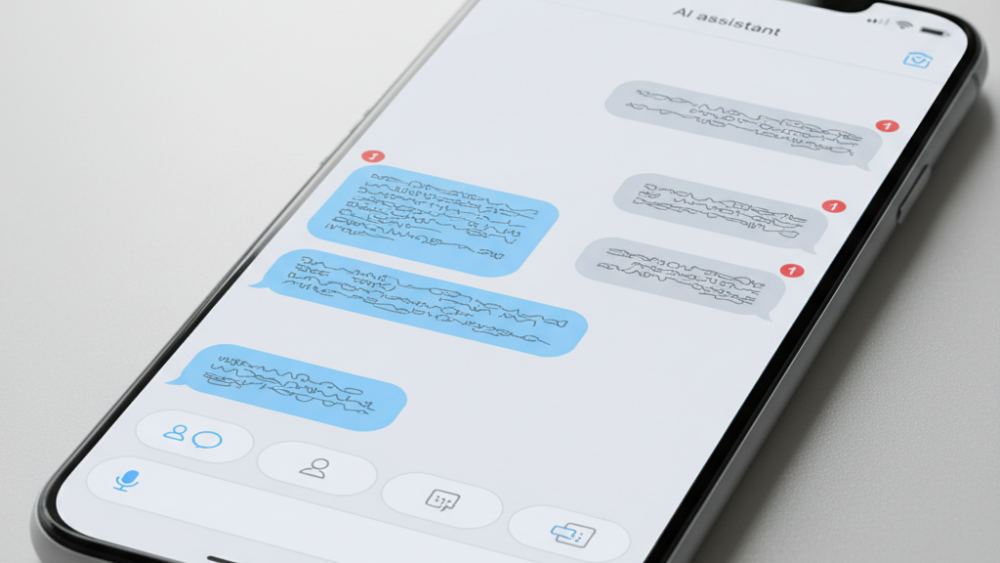
Lead qualification through conversational AI transforms how businesses filter prospects. Intelligent chatbots ask qualifying questions ("What's your current monthly revenue?" or "How many employees do you have?"), assess fit based on responses, and route hot leads to sales teams immediately while adding others to nurture sequences. This happens instantly, at any hour, without human staff screening every inquiry.
Speed matters: AI agents like Rocket respond to new leads in under 60 seconds, five times faster than the average business, dramatically improving conversion before prospects contact competitors.
Automated lead response agents like Rocket handle the critical first moments after someone expresses interest. They respond within 60 seconds to new inquiries, answer common questions about pricing and services, and book appointments before prospects cool off or contact competitors. The AI doesn't just send a canned "we'll get back to you" message. It engages in actual conversation, understands intent, and moves the prospect forward.
Lead nurturing sequences adapt based on behavior, engagement, and position in the sales funnel. When a prospect opens three emails about a specific service but hasn't taken action, the AI recognizes the interest pattern and sends targeted case studies or offers a consultation. When they visit your pricing page twice in one day, the AI knows they're close to deciding and triggers a time-sensitive promotion. This responsiveness requires monitoring individual behaviors across channels and acting on signals, work no human team could handle at scale.
Sales funnel automation moves prospects from awareness through consideration to decision with triggered content, offers, and follow-up tailored to their actions. Someone who downloads a beginner's guide enters a different sequence than someone who requests a demo. The AI understands where they are in the journey and what they need next.
AI phone receptionists handle incoming calls, answering questions, capturing information, and booking appointments without human staff. Launch CRM's voice AI teammate answers calls around the clock, qualifying callers and scheduling appointments in real time. This extends business hours and ensures no lead goes unanswered because the team is busy or after-hours.
The AI Employee Suite Approach
Rather than deploying a single general-purpose assistant that does everything adequately, the most effective systems use specialized AI teammates, each focused on a specific business function. This mirrors how you'd hire specialists rather than expecting one person to handle sales, customer service, marketing, and operations equally well.
Launch CRM's AI employee suite includes six specialized teammates handling diverse business tasks around the clock. Conversation AI manages chat interactions across web, social media, and messaging platforms, understanding context and maintaining natural dialogue. Voice AI handles phone calls, answering questions, qualifying leads, and booking appointments with human-like speech patterns. Reviews AI monitors reputation, requests feedback from customers, responds to reviews, and posts testimonials automatically.
Content AI creates marketing materials: social posts, email copy, ad text, blog outlines based on your brand voice and campaign goals. Funnel AI analyzes sales processes, identifies bottlenecks, and optimizes conversion paths by testing messaging and offers. Workflow AI designs and maintains automation sequences, suggesting improvements based on performance data.
This specialization delivers better results than general chatbots because each AI is trained on domain-specific tasks and business context. Your conversation AI becomes expert at handling customer objections and qualifying leads through dialogue. Your voice AI develops proficiency in phone etiquette and appointment setting. Each AI teammate learns the nuances of its domain rather than being a jack-of-all-trades.
The AI teammates work together, sharing customer data and context to create seamless experiences across touchpoints. When someone chats on your website, then calls an hour later, the voice AI knows about the chat conversation. When a customer leaves a review, the reviews AI responds while the workflow AI triggers a thank-you gift sequence. This coordination happens automatically because the AI teammates operate within one platform sharing unified customer records.
Popular AI Assistants and Their Business Applications
ChatGPT is a conversational AI assistant recognized for generating text, drafting emails, and brainstorming content ideas. Useful for marketing teams, but it requires human input and operates outside business systems. You can ask it to write a product description or outline a blog post, but you must manually copy the output into your website or marketing platform. It doesn't connect to your CRM, access your customer data, or trigger business processes.
Claude (Anthropic) is noted for long-document analysis and coding assistance, valuable for businesses reviewing contracts, summarizing research, or developing technical content. Teams use Claude to analyze lengthy legal documents, extract key terms, and spot potential issues faster than manual review.
Google Gemini is an AI assistant best suited for the Google ecosystem and voice-first smart home control. Its strength lies in integration with Google services (Calendar, Gmail, Drive) and controlling smart devices through voice commands. For businesses already deeply invested in Google Workspace, Gemini offers convenient automation, but it lacks the comprehensive business operations integration needed to manage leads, sales pipelines, and customer journeys.
Perplexity AI is recognized for research capabilities and sourcing information quickly, helping teams gather competitive intelligence or market data. When you need to understand industry trends, competitor positioning, or emerging technologies, Perplexity excels at synthesizing information from multiple sources and citing references.
Microsoft Copilot is designed for Office 365 users, integrating with Word, Excel, and Outlook to assist with document creation and data analysis. It can draft presentations, build spreadsheet formulas, and summarize email threads, improving productivity for teams living inside Microsoft applications.
Motion focuses on calendar management, project management, and time optimization. It intelligently schedules tasks based on deadlines, priorities, and available time, rebuilding your calendar automatically when meetings shift or tasks run long. This addresses a specific pain point (time management) but lacks the multi-functional capabilities of comprehensive business platforms.
Zapier offers capabilities for building custom AI assistants for any task and automating workflows across 9,000+ apps. This flexibility lets businesses create specialized automation connecting their existing tools, though it still treats AI as a connector between separate systems rather than providing a unified all-in-one platform for customer relationship management and business operations.
These tools are largely conversational AI or single-app assistants, lacking the comprehensive business operations integration of platforms that combine CRM, marketing automation, sales management, and AI assistance in one system.
When Advanced AI Isn't the Right Solution
Businesses with extremely complex, highly regulated compliance requirements may need human oversight at every customer interaction point. Financial advising, medical diagnostics, and legal counsel involve nuanced judgment calls and ethical considerations where AI can assist but shouldn't replace human expertise. An AI assistant can schedule appointments, gather preliminary information, and handle administrative tasks, but the substantive work requires licensed professionals.
Know the limits: Highly regulated industries and extremely sensitive customer interactions still require human oversight. Effective AI systems make escalation to human staff easy when situations demand human judgment.
Security and data privacy concerns require careful vetting. Businesses handling sensitive customer information must verify data encryption, compliance certifications (SOC 2, GDPR, HIPAA where applicable), and clear data usage policies before implementation. The primary risk isn't the AI itself but inadequate vendor due diligence. Review security documentation and certifications as part of your selection process, not after you've migrated customer data.
Setup and integration challenges are real. Implementing an advanced AI assistant requires migrating customer data from existing CRM and marketing tools, which means mapping fields, cleaning duplicate records, and importing communication history. Expect three to seven days for data migration. Training the AI on business-specific processes, tone, and responses takes iteration. Plan one to two weeks of testing and refinement with actual customer interactions before going fully live.
Team adoption challenges emerge as staff adjusts to working alongside AI teammates. Some team members worry about being replaced. Others resist changing established workflows. Invest in training sessions explaining how AI handles routine work so humans can focus on complex problem-solving and relationship building. Allow time for new workflows to become routine rather than expecting instant adoption.
The risk of over-automation exists when businesses eliminate human touchpoints entirely. Customers sometimes need empathy and creative problem-solving that AI can't provide. Effective systems allow easy escalation to human staff when AI reaches its limits: when a customer becomes frustrated, when a situation involves exceptions to standard policy, or when the query falls outside the AI's training.
Cost considerations matter for very small businesses. While consolidation saves money compared to multiple tools, a solo entrepreneur handling ten to twenty leads monthly may not need the full power of an advanced AI system. The complexity and capabilities match businesses with higher lead volumes and more sophisticated operations.
Choosing and Implementing Your AI Assistant
Start by assessing your tool sprawl. List every software subscription you're paying for: CRM, email platform, SMS service, scheduler, form builder, payment processor, review management, social media tools. Note which ones overlap in function and where you're manually transferring data between systems. This audit reveals consolidation opportunities.
Calculate potential savings by tallying your monthly software costs. Consolidating into a single all-in-one platform typically reduces business software costs by 40-60% while improving integration and data flow. Factor in the time your team spends switching between tools, manually entering data, and troubleshooting integration issues. Those hours have real dollar value.
Identify your highest-value automation opportunity. Is your biggest pain point slow lead response time? Missed appointments because follow-up falls through the cracks? Inconsistent customer service when team members handle inquiries differently? Review generation that never happens because asking feels awkward? Choose a platform strong in your priority area. If lead response speed is critical, look at response times and whether the system includes an AI phone agent and rapid lead engagement. If you need to see detailed pricing, review information specifically for AI features to understand cost structures.
Evaluate CRM integration depth carefully. The most powerful advanced AI assistants are built into comprehensive platforms that manage customer data, communication history, sales pipelines, and marketing campaigns together. Systems treating AI as an add-on to disconnected tools deliver less value than platforms where AI is woven throughout the entire business operating system.
Review the AI employee suite or equivalent. Look for specialized AI teammates handling different business functions (lead management, phone interactions, reputation management, content creation, funnel optimization, and workflow automation) rather than a single general chatbot. This specialization ensures expertise in each domain.
Consider starting with a trial of our unified platform to test how an advanced AI assistant handles your actual leads, customer inquiries, and business processes before committing. Seeing Rocket respond to a real lead in under 60 seconds, watching conversations flow across web chat and text messaging, and experiencing how specialized AI teammates collaborate gives you confidence that the system delivers on its promises.
Plan your data migration and team training. Budget time for importing contacts, setting up automation rules, and teaching your team to work alongside AI teammates rather than replacing established processes overnight. Successful implementation happens in phases: first migrating core data, then activating basic automation, then adding sophisticated workflows as your team grows comfortable with the platform. Rushing creates confusion and resistance.
Moving Beyond Basic Chatbots
The evolution from answering questions to managing operations represents the fundamental shift in AI assistants over the past two years. Basic chatbots remain useful for specific tasks (drafting content, researching topics, generating ideas) but they don't transform business operations. They're tools you use; they don't run processes independently.
Businesses that consolidate tools and implement comprehensive AI platforms gain competitive advantages in response time, lead conversion, and operational efficiency. When your AI assistant responds to leads five times faster than competitors, books appointments while they're still checking email, and follows up consistently without anyone thinking about it, you win deals you would've lost.
The future belongs to AI business operating systems that combine customer relationship management, marketing automation, sales processes, and customer service into intelligent, integrated platforms. These systems don't just do what you tell them. They proactively manage operations, identify opportunities, and handle the routine work that buries most teams.
The companies succeeding with advanced AI aren't necessarily the largest or most technically sophisticated. They're the ones willing to rethink their tech stack, consolidate scattered tools, and let specialized AI teammates handle the work those tools used to require human operation. They measure success not in how many AI tasks they've automated but in how much faster they grow, how much more profitable they become, and how much time their teams reclaim for strategic work.
Frequently asked questions
What is an advanced AI assistant?
An advanced AI assistant is software that uses artificial intelligence to automate complete business workflows across lead management, customer communication, marketing, and sales rather than handling single tasks. Unlike basic chatbots that answer questions with human input, advanced AI assistants operate autonomously across multiple applications and integrate deeply with CRM platforms. These systems function as AI business operating systems, consolidating the capabilities of five to ten separate tools into one intelligent platform.
How can AI assistants improve business operations?
AI assistants streamline operations by consolidating multiple software subscriptions into a single platform, reducing tool sprawl and integration complexity. They operate around the clock without breaks, responding to leads in under 60 seconds, handling customer inquiries, booking appointments, and managing follow-up sequences automatically. Unified data and reporting reveal customer journey patterns impossible to see with scattered tools, enabling better strategic decisions and showing which campaigns drive not just leads but closed revenue.
What features should a business AI assistant have?
Multi-channel communication management is essential: email, SMS, web chat, Google Business Messaging, social media DMs, and phone calls from one interface. Rapid lead response capability with intelligent qualification and routing to appropriate team members ensures no opportunity slips away. Deep CRM integration connecting customer data, communication history, sales pipelines, and marketing campaigns creates a unified view. Specialized AI teammates for different functions (conversation handling, voice interactions, reputation management, content creation, funnel optimization, and workflow automation) deliver expertise in each domain. Comprehensive business management tools including reporting dashboards, appointment scheduling, payment processing, and document management complete the platform.
What is the difference between a basic AI chatbot and an advanced AI assistant for business?
Basic AI chatbots answer questions and generate text but require human input and operate in isolation from business systems. You ask them to draft an email or explain a concept, and they respond, but you must manually take that output and do something with it. Advanced AI assistants for business integrate with CRM platforms, automate complete workflows, manage leads across the sales funnel, and coordinate multiple business functions. The key difference is scope: chatbots handle conversations while advanced assistants operate as business operating systems managing operations end-to-end without human intervention.
How do advanced AI assistants help with lead qualification and conversion?
AI assistants engage new leads immediately. Systems like Rocket respond in under 60 seconds before prospects cool off or contact competitors. They ask qualifying questions through conversational AI, assess fit based on responses, and route hot leads to sales teams while nurturing others with automated sequences. AI-driven follow-up adapts based on prospect behavior and position in the sales funnel, delivering triggered content and offers that move them toward decisions. This responsiveness at scale (monitoring every lead, recognizing buying signals, and acting instantly) outperforms even large sales teams manually managing pipelines.
Can an advanced AI assistant truly replace multiple software subscriptions for a business?
Yes. All-in-one AI platforms consolidate email marketing, SMS services, CRM, appointment scheduling, form builders, payment processing, review management, and social media tools into one system. This consolidation typically reduces software costs by 40-60% while improving integration and eliminating data silos between disconnected tools. The caveat is that extremely specialized industry tools or highly regulated compliance systems may still require dedicated software alongside an advanced AI assistant. But for core business operations (managing customers, marketing, sales, and service) comprehensive platforms replace the majority of point solutions.
What kind of automation can an advanced AI assistant perform in marketing and sales?
Marketing automation includes email and SMS campaigns triggered by customer behavior, web chat engagement, social media message responses, webinar follow-up, and content delivery based on funnel position. Sales automation covers lead capture from multiple channels, immediate response, appointment booking, pipeline management, proposal generation, text-to-pay invoicing, and contract management. Cross-functional automation moves prospects from marketing campaigns through sales processes to customer service follow-up without manual handoffs, with AI tracking the entire journey and adjusting sequences based on how prospects engage at each stage.
How secure is business data when using an advanced AI assistant platform?
Security depends on the specific platform. Businesses must verify data encryption, compliance certifications (SOC 2, GDPR, HIPAA where applicable), and clear data usage policies before implementation. Reputable AI platforms maintain separate customer data environments, use encrypted connections, and provide access controls limiting which team members see sensitive information. The primary risk is not the AI itself but inadequate vendor due diligence. Review security documentation and certifications as part of your selection process, and ask direct questions about where data is stored, who can access it, and how it's protected.
What are the typical setup and integration challenges for implementing an advanced AI assistant?
Data migration from existing CRM and marketing tools requires mapping fields, cleaning duplicate records, and importing communication history. Expect three to seven days for this step. Training the AI on business-specific processes, tone, and responses takes iteration; plan one to two weeks of testing and refinement with actual customer interactions before going fully live. Team adoption challenges are common as staff adjusts to working alongside AI teammates. Invest in training sessions and allow time for new workflows to become routine rather than expecting instant adoption. The businesses that succeed treat implementation as a deliberate process, not a switch-flip event.
If you're ready to replace multiple subscriptions with a unified system and see how AI teammates can transform your business operations, explore our platform with a free trial and experience what advanced AI assistance actually delivers in practice.