
Small Business SEO Services: What They Include and How to Choose
Last updated September 23, 2026
Small business SEO services are specialized strategies that improve a website's visibility in search engine results to attract organic traffic, leads, and sales. These services typically include a technical website audit, keyword research, on-page optimization, content creation, local SEO efforts, and monthly performance reporting tailored to businesses with limited budgets and local customer bases.
Table of contents
- Key takeaways
- What Small Business SEO Services Include
- Why Small Businesses Need SEO in 2026
- Local SEO: The Critical Component for Physical Locations
- Core SEO Components Every Small Business Needs
- How to Choose an SEO Provider for Your Small Business
- Small Business SEO Pricing and Package Comparison
- SEO Package Comparison
- How Launch CRM Enhances Your SEO Investment
- When Small Business SEO Isn't the Right Approach
- Common Mistakes Small Businesses Make with SEO
- Measuring Your Small Business SEO Success
- Taking Action on Your SEO Strategy
- Frequently asked questions
Key takeaways
- Small business SEO packages range from $500 to $5,000 monthly depending on scope, deliverables, and market competition.
- Local SEO is crucial for physical locations, with Google My Business optimization driving 58% more local search visibility.
- An all-in-one CRM platform can consolidate SEO support tools, cutting software costs by 60% while improving lead conversion rates.
- AI-powered content generation and review management can automate SEO-related tasks that traditional agencies charge separately.
- Post-click experience optimization through automated follow-up can boost SEO lead conversion by 37% or more.
What Small Business SEO Services Include
Small business SEO services encompass the process of improving a website's visibility on search engines like Google to attract more organic traffic, with packages tailored for businesses with limited budgets and specific local needs. Unlike enterprise campaigns, these services focus on achievable wins that deliver measurable results within 6-12 months rather than targeting impossibly competitive national keywords.
A foundational technical audit identifies crawl errors, page speed issues, mobile usability problems, and broken links that prevent search engines from properly indexing your site. This audit provides the roadmap for prioritizing improvements that will have the biggest impact on your search rankings.
Keyword research identifies the terms and phrases users enter into search engines to find your products or services. Smart small business SEO strategies target long-tail keywords like "emergency plumber in Carlsbad" instead of generic terms like "plumber." You're focusing on achievable targets with commercial intent rather than high-competition terms dominated by enterprises.
On-page SEO optimizes individual web pages through strategic title tags, meta descriptions, header structures, internal linking, and content optimization to rank higher for target keywords. This includes optimizing existing service pages and creating new location-specific content that answers the questions your customers are actually searching for.
Most providers include monthly reporting that tracks organic traffic, keyword rankings, backlink growth, and conversion metrics to demonstrate ROI and inform strategy adjustments. However, many SEO reports stop at website visits without tracking what happens next (whether visitors become leads, book appointments, or make purchases).
Why Small Businesses Need SEO in 2026
Small businesses that appear on the first page of Google search results capture 92% of all organic search traffic, while those on page two or beyond receive fewer than 8% of clicks. That first-page positioning determines whether potential customers in Carlsbad and beyond even know you exist.
Unlike paid advertising that stops generating leads the moment you pause spending, SEO builds long-term visibility that continues driving traffic and revenue months or years after initial optimization. A well-optimized blog post can deliver qualified leads for three or four years without additional investment.
Local search queries containing "near me" or city names have grown 400% since 2021. Seventy-six percent of people who search for something nearby on their smartphone visit a physical location within 24 hours. This shift makes SEO crucial for service businesses that depend on local customers walking through the door.
SEO delivers a higher return on investment than traditional advertising for small businesses, with Coalition Technologies reporting clients achieving 687% more revenue than average agency results. That ROI compounds over time as your rankings improve and your content library expands.
Search engine visibility establishes credibility and trust with potential customers, as 63% of consumers research a business online before making a purchasing decision or visiting a location. Your organic search presence functions as continuous advertising that costs nothing per impression and builds authority with every click.
Local SEO: The Critical Component for Physical Locations
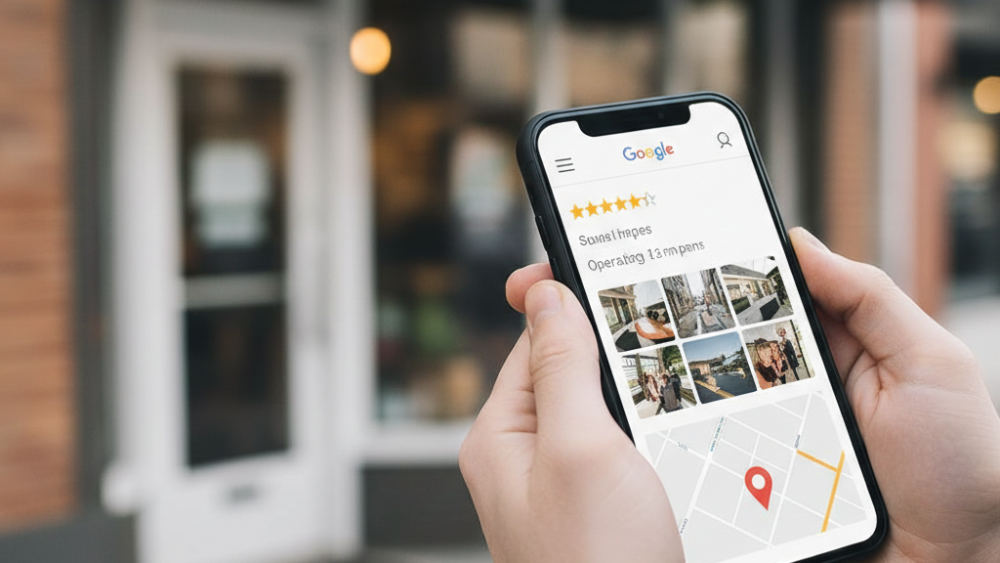
Local SEO focuses on optimization efforts to rank higher in local search results, which is crucial for businesses with physical locations serving customers in specific geographic areas like Carlsbad. This specialized approach targets the high-intent searches that drive foot traffic and phone calls.
Google My Business optimization is the foundation of local SEO. It requires accurate business information, regular posts, high-quality photos, and active management of customer questions and reviews across Google Search and Maps. Your GMB profile often appears above organic results in the local 3-pack, capturing attention before competitors.
Local citation building involves listing your business name, address, and phone number consistently across directories like Yelp, Yellow Pages, Facebook, and industry-specific platforms to strengthen local search signals. Inconsistent information (like spelling out "Avenue" on some sites but abbreviating "Ave" on others) confuses search engines and weakens your rankings.
Location-specific content creation targets neighborhood names, local landmarks, and community events to capture search queries from nearby customers actively seeking your services. A blog post about "Best practices for maintaining HVAC systems in coastal California climates" performs better than generic national content if you serve Carlsbad businesses.
Review management directly impacts local rankings. Businesses with 40 or more Google reviews rank higher in local search results and convert 32% more browsers into customers. Automated systems that request reviews after every appointment can increase review acquisition by 400% compared to manual follow-up.
Local priority: For businesses with physical locations, spending 70% of your SEO budget on local optimization (Google My Business, citations, reviews, location content) delivers better ROI than competing for national keywords. Win your neighborhood before expanding your reach.
Core SEO Components Every Small Business Needs
Technical SEO optimizes your website's infrastructure to help search engine crawlers access, crawl, interpret, and index the site more effectively through proper site architecture, XML sitemaps, schema markup, and HTTPS security. These behind-the-scenes improvements determine whether Google can even read your content.
Content creation involves developing valuable and relevant text, images, and multimedia to engage target audiences and improve search engine rankings, with blog posts, service pages, and educational resources answering customer questions. Thin content that rehashes information from competitors won't rank. You need original insights and specific details.
Off-page SEO encompasses actions taken outside of your website to impact search rankings, primarily through backlinks from reputable industry sites, local news outlets, and business directories that signal authority to Google. A single link from a high-authority local news site can outweigh dozens of directory listings.
Mobile optimization ensures your website loads quickly and functions perfectly on smartphones and tablets, which now account for 58% of all search queries and directly influence Google's mobile-first indexing. A slow-loading mobile site kills conversions even if you rank well.
Conversion rate optimization works alongside SEO to improve what happens after visitors arrive, turning traffic into leads through clear calls to action, trust signals, and streamlined contact forms. Traditional SEO agencies drive traffic but ignore this crucial final step, leaving 60-80% of your hard-won visitors unconverted.
How to Choose an SEO Provider for Your Small Business
Evaluate providers by requesting case studies with specific results for businesses similar to yours in size, industry, and market. Look for concrete metrics like traffic increases, ranking improvements, and revenue growth rather than vague promises. Coalition Technologies demonstrated a 141.3% increase in AI SEO sessions for one client and 364.6% transaction growth within the first month for another.
Ask about their reporting transparency and frequency. Ensure they provide monthly dashboards showing keyword rankings, organic traffic, backlink acquisition, and conversion metrics tied to business outcomes. Reports that skip conversion data or customer acquisition costs hide whether SEO actually makes you money.
Verify they follow ethical white-hat SEO practices rather than risky shortcuts like purchased backlinks or keyword stuffing that can result in Google penalties and long-term ranking damage. Agencies promising page-one rankings in 30 days typically use tactics that get you penalized within six months.
Understand their contract terms, typical engagement length (most effective SEO campaigns require 6-12 months to show substantial results), and what happens to your content and accounts if you end the relationship. You should own all content created and maintain access to your Google My Business profile and analytics accounts.
Assess their communication style and availability, as the best provider relationships involve regular strategy discussions, collaborative content planning, and quick responses when you have questions or need adjustments. Monthly reports with no explanation or discussion aren't worth the subscription cost.
Small Business SEO Pricing and Package Comparison
The cost of small business SEO varies significantly based on scope, agency reputation, and deliverables, ranging from $500 monthly for basic local SEO to $5,000 or more for comprehensive national campaigns. Understanding what you receive at each price point prevents overpaying for services you don't need or underinvesting and seeing no results.
Entry-level packages typically include limited keyword targeting (5-10 keywords), basic on-page optimization, monthly reporting, and minimal content creation suitable for very small local businesses with low competition. These packages work for a new coffee shop in a small town, not a plumber in competitive Southern California markets.
Mid-tier packages ($1,500-$3,000 monthly) offer expanded keyword targeting (20-40 keywords), regular content creation (2-4 blog posts monthly), link building, technical SEO maintenance, and Google My Business management. This tier suits most established small businesses competing in moderate markets.
Enterprise packages exceed $5,000 monthly and include aggressive content calendars, advanced technical optimization, dedicated account management, custom reporting dashboards, and multi-location strategies. These campaigns target highly competitive keywords or support businesses with multiple locations.
The table below compares what you typically receive at each price point, helping you understand which investment level matches your business goals and competitive landscape.
| Package Tier | Monthly Cost | Keywords Targeted | Content Created | Best For |
|---|---|---|---|---|
| Entry-Level | $500-$1,000 | 5-10 | 1 blog post | New local businesses, low competition |
| Mid-Tier | $1,500-$3,000 | 20-40 | 2-4 blog posts | Established small businesses, moderate competition |
| Premium | $3,000-$5,000 | 40-75 | 4-8 blog posts | Growing businesses, competitive markets |
| Enterprise | $5,000+ | 75+ | 8+ blog posts | Multi-location or national campaigns |
Cost reality: Effective small business SEO typically ranges from $1,500 to $3,000 monthly and requires 6-12 months of consistent effort before substantial results appear. Budget accordingly and avoid agencies promising page-one rankings in 30 days. Those guarantees are red flags for risky tactics.
SEO Package Comparison
Small business SEO packages range from $500 to $5,000 monthly depending on scope, deliverables, and market competition, with each tier offering distinct services that match different business needs and growth stages.
Basic packages priced at $500-$1,500 monthly typically include 5-10 target keywords, basic on-page optimization, monthly reporting, Google My Business setup, and one blog post monthly. These entry-level services suit new businesses in low-competition markets or those testing SEO before committing larger budgets.
Growth packages ranging from $1,500-$3,000 monthly expand to 20-40 target keywords, comprehensive on-page optimization, quarterly strategy reviews, active GMB management with regular posts, 2-4 blog posts monthly, 5-10 backlinks monthly, and technical SEO audits. This tier delivers the best value for most established small businesses competing in moderate markets.
Enterprise packages starting at $3,000-$5,000 or more monthly target 40-plus keywords, provide advanced on-page optimization, include monthly strategy calls, manage multi-location GMB profiles, produce 4-8 blog posts monthly, build 10-20 backlinks monthly, offer ongoing technical optimization, and deliver custom reporting dashboards. These comprehensive campaigns suit businesses with multiple locations or highly competitive service areas.
Setup fees typically range from $500 to $2,500 for initial audit, keyword research, and foundational optimization work that precedes monthly services. Most agencies require 6-month minimum commitments, though month-to-month options exist at 15-20% higher monthly rates to compensate for the lack of commitment.
How Launch CRM Enhances Your SEO Investment
Launch CRM's all-in-one approach consolidates tools typically used alongside SEO services into a single platform that cuts software costs by up to 60% while improving the conversion rates that justify your SEO investment.
Launch CRM consolidates email marketing for nurturing organic leads, CRM for tracking conversion paths, and review management for local SEO signals into one system. This eliminates the need for separate subscriptions that collectively cost $500-$1,000 monthly. The money you save on tools can fund better SEO services or additional marketing channels.
Our AI Agent (Rocket) provides immediate automated follow-up to SEO-driven leads within 60 seconds, answering phone calls, booking appointments, and posting review requests automatically. Traditional SEO agencies drive traffic but don't handle what happens after visitors arrive, often losing 60-80% of leads because response time exceeds 5 minutes or calls go to voicemail.
The AI Employee Suite includes Content AI that assists with blog post generation and Reviews AI that automates review request campaigns and response management, directly supporting on-page and local SEO efforts. These AI tools eliminate the need for separate AI writing subscriptions or reputation management platforms that cost $100-$300 monthly each.
Launch CRM's comprehensive reporting dashboard provides a holistic view of marketing performance that connects SEO outcomes like traffic and rankings with lead conversion rates, customer acquisition costs, and overall business growth. Typical SEO reports stop tracking at the website visit, missing the crucial data about which keywords and content pieces actually generate paying customers versus tire-kickers.
Automation features like missed call text back, GMB messaging, and web chat improve user experience and engagement for visitors arriving from organic searches. These features reduce bounce rates and increase local signals that indirectly boost SEO performance while capturing leads that would otherwise be lost to competitors who answer their phones.
Integration advantage: SEO agencies drive traffic but stop tracking at the website visit. An integrated CRM platform connects search visibility to lead conversion, customer acquisition costs, and revenue, giving you the complete picture that guides smarter marketing decisions.
When Small Business SEO Isn't the Right Approach
SEO isn't the optimal strategy for every small business situation, particularly when budget constraints, timeline pressures, or market dynamics make other marketing channels more cost-effective for lead generation.
Businesses in extremely competitive markets with limited budgets may find SEO costs prohibitive compared to paid advertising, especially when competing against established enterprises with dedicated SEO teams and million-dollar content budgets. A new personal injury law firm in Los Angeles faces an uphill battle against competitors who've invested in SEO for 10-plus years.
Companies needing immediate leads within days or weeks should prioritize paid search or direct outreach, as effective SEO typically requires 4-6 months to show measurable ranking improvements and 6-12 months for substantial traffic growth. If you're launching a business next month and need customers immediately, paid advertising delivers faster results.
E-commerce businesses selling commodity products with identical descriptions across hundreds of competitor sites face significant content challenges that require massive investment to differentiate and rank. Competing to rank for "buy iPhone 15" when Amazon, Best Buy, and Apple dominate results sometimes exceeds $10,000 monthly with minimal success probability.
Businesses without the internal resources to implement technical fixes, create content, or manage ongoing optimization should factor in either higher agency fees for full-service management or platform tools that automate these tasks. SEO requires consistent effort. Agencies charging $800 monthly expect you to handle technical changes they recommend.
Companies operating in rapidly changing industries or launching products with uncertain market fit should validate demand through paid testing before committing to long-term SEO investments in keywords that may not drive qualified traffic. Spending six months optimizing for keywords nobody actually searches wastes time and money better spent on market validation.
Common Mistakes Small Businesses Make with SEO
Small businesses frequently undermine their SEO investments through five common missteps that waste budgets and delay results, each preventable with proper planning and realistic expectations.
Targeting overly competitive keywords dominated by national brands instead of focusing on long-tail, location-specific terms where small businesses can actually rank and capture ready-to-buy customers represents the most expensive mistake. Competing for "plumber" nationally is futile. Ranking for "emergency water heater repair in Pasadena" is achievable and more valuable.
Neglecting Google My Business optimization and review management, which are the highest-impact activities for local businesses but often overlooked in favor of flashier website changes, costs leads daily. A well-optimized GMB profile with 40-plus recent reviews outperforms a technically perfect website with five old reviews in local search results.
Expecting immediate results and abandoning SEO efforts after 2-3 months when rankings haven't moved significantly demonstrates a fundamental misunderstanding that sustainable organic visibility requires 6-12 months of consistent effort. SEO is compound interest, not a lottery ticket. Results accelerate over time as your content library grows and authority builds.
Creating thin, keyword-stuffed content that provides no real value to readers instead of answering customer questions thoroughly backfires because Google's algorithms now penalize rather than reward this approach. A 300-word blog post that repeats "best plumber" 20 times ranks worse than a 1,200-word guide explaining how to choose a licensed plumber.
Failing to track and optimize the post-click experience loses 60-80% of hard-won organic traffic because slow-loading pages, confusing navigation, or lack of clear calls to action prevent visitors from converting into leads. Ranking on page one means nothing if visitors immediately hit the back button or can't figure out how to contact you.
Measuring Your Small Business SEO Success
Small business SEO success requires tracking specific metrics that reveal not just traffic increases but actual business impact, measured through a combination of visibility, conversion, and revenue data.
Track organic traffic growth month-over-month in Google Analytics, segmented by landing page and device type, to identify which content and keywords are driving the most visitors to your website. A 15% monthly traffic increase sustained over six months indicates healthy SEO momentum, while flat or declining traffic signals strategy problems.
Monitor keyword rankings for your target terms using tools like Google Search Console, focusing on positions 1-10 (page one) where 92% of clicks occur rather than celebrating meaningless jumps from position 87 to 62. Moving from position 12 to position 7 matters. Moving from position 150 to position 75 changes nothing about your business.
Measure conversion rates from organic traffic specifically, calculating how many search visitors complete desired actions like form submissions, phone calls, or purchases compared to other traffic sources. If organic traffic converts at 3% while paid traffic converts at 8%, your SEO may be targeting the wrong keywords or your landing pages need optimization.
Analyze local search visibility through GMB Insights, tracking how many people found your business through Google Search versus Google Maps, called your phone number, requested directions, or visited your website. Growing GMB impressions from 500 to 2,000 monthly while maintaining or improving click-through rates demonstrates successful local SEO.
Calculate customer acquisition cost from SEO by dividing your total monthly SEO investment (agency fees plus internal time) by the number of new customers gained from organic search, comparing this to paid advertising channels. If SEO-driven customers cost $150 to acquire versus $400 from Google Ads, your SEO investment delivers superior long-term returns.
Taking Action on Your SEO Strategy
The most successful small businesses combine professional SEO services with integrated platforms that maximize the value of every organic visitor through automated follow-up, systematic lead nurturing, and comprehensive performance tracking.
Whether you engage an external SEO provider or handle optimization in-house, connecting your search visibility efforts to a unified customer management and marketing system ensures no lead falls through the cracks. Every dollar invested in rankings generates measurable business growth when you pair traffic generation with conversion optimization.
Launch CRM's all-in-one platform eliminates the need to manage separate subscriptions for CRM, email marketing, review management, and AI assistance. This gives you the infrastructure to capitalize on SEO-driven traffic while cutting your software costs by more than half compared to point solutions. Businesses using Launch CRM alongside their SEO efforts see higher conversion rates because leads receive immediate response and systematic follow-up.
Small business owners ready to transform their search visibility into systematic revenue growth can learn how Launch CRM integrates marketing, sales, and customer management into a single AI-powered solution. The platform's automated systems for lead response, review generation, and customer communication amplify the results from your SEO investment by converting more visitors into paying customers.
Platforms like those offered through Launch Commerce provide the infrastructure that turns SEO traffic into revenue, connecting all pieces of your digital presence into one manageable system that scales with your business growth.
Frequently asked questions
How does local SEO specifically benefit small businesses with physical locations?
Local SEO increases visibility in geographic-specific search results and Google Maps, putting your business in front of customers actively searching for services "near me" or in your city. Seventy-six percent of these searchers visit a location within 24 hours, making local visibility extremely valuable.
Optimized Google My Business profiles with complete information, regular posts, and positive reviews appear in the prominent local 3-pack above organic results, capturing high-intent customers at the exact moment they're ready to buy. This placement delivers more qualified leads than traditional organic rankings.
Local search optimization costs significantly less than competing for national keywords while delivering higher conversion rates because you're targeting customers who can actually visit your physical location. A plumber in San Diego benefits more from dominating local results than appearing on page three for national keywords.
What are common mistakes small businesses make when implementing SEO?
Targeting impossibly competitive keywords instead of achievable long-tail terms, creating content that provides no real value, and expecting results in 2-3 months when sustainable SEO requires 6-12 months of consistent effort waste budgets frequently. Patience and realistic keyword selection determine success.
Neglecting Google My Business and review management (the highest-impact activities for local businesses) while focusing exclusively on website changes that take longer to show results misses quick wins. GMB optimization delivers visible results within weeks.
Failing to optimize the post-click experience with fast loading, clear calls to action, and automated follow-up loses 60-80% of organic traffic because visitors can't easily convert or receive no timely response. Traffic without conversion accomplishes nothing for your business.
How can I tell if my small business SEO strategy is working?
Monitor month-over-month organic traffic growth in Google Analytics, keyword ranking improvements for target terms (specifically positions 1-10 on page one), and conversion rates from organic visitors completing desired actions like form submissions or phone calls. Sustained growth across all three metrics indicates effective strategy.
Track Google My Business metrics including search appearances, map views, direction requests, and phone calls originating from your GMB profile to measure local search visibility improvements. Doubling GMB impressions over six months demonstrates strong local SEO momentum.
Calculate customer acquisition cost from SEO by dividing total monthly investment by new customers gained from organic search, comparing this to paid channels. Effective SEO should show improving cost efficiency over 6-12 months, eventually becoming your lowest-cost customer acquisition channel.
Should small businesses focus on national or local SEO first?
Small businesses with physical locations serving local customers should prioritize local SEO first because it's more affordable, achievable, and delivers higher conversion rates from people who can actually visit your store or office. Local dominance builds faster than national visibility.
Local SEO optimization (Google My Business, local citations, location-specific content) typically shows results faster, often within 3-4 months, compared to national campaigns that may take 12-18 months to compete against established brands. Quick wins build momentum and justify continued investment.
Once local visibility is strong and generating consistent leads, expanding to broader regional or national keywords makes sense if your business model supports shipping products or serving remote customers. Build from strength rather than diluting efforts across too many targets initially.
Can a small business do SEO effectively in-house or should they always hire an agency?
Small businesses with someone who can dedicate 10-15 hours weekly to learning SEO fundamentals, creating content, and implementing technical improvements can handle basic optimization in-house using free tools like Google Search Console and affordable platforms. Consistent effort matters more than expensive tools for foundational SEO.
Hiring an agency makes sense when internal resources are limited, your market is highly competitive, or you need faster results and specialized expertise in technical optimization, link building, or content strategy. Agencies justify their cost through experience and dedicated focus.
The hybrid approach works best for many small businesses: using an agency for strategy, technical audits, and link building while handling content creation and local listing management in-house with the support of integrated platforms that automate review requests and GMB posts. This combination maximizes budget efficiency.
How important are customer reviews for small business SEO?
Customer reviews are critical for local SEO rankings, with businesses that have 40 or more Google reviews ranking significantly higher in local search results than competitors with fewer reviews. Reviews also convert 32% more browsers into customers through social proof.
Review quantity, recency, rating average, and owner responses all factor into Google's local ranking algorithm, making active review management one of the highest-impact SEO activities for small businesses with physical locations. Fresh reviews signal active business operations to Google.
Automated review management tools that request feedback after appointments, respond to reviews promptly, and display testimonials across your website can increase review acquisition by 400% compared to manual methods. Systematic approaches outperform hoping customers remember to leave reviews.
How can CRM tools help with SEO?
CRM tools enhance SEO efforts by tracking which keywords and content pieces generate the highest-quality leads, allowing you to optimize your strategy based on actual customer acquisition rather than just traffic numbers. This data reveals the difference between vanity metrics and revenue-generating visibility.
Customer Relationship Management platforms with integrated review management automate the collection and response to Google reviews, directly improving local SEO rankings through increased review volume and recency. The connection between CRM and reviews creates a systematic advantage.
CRM automation features like immediate lead follow-up, email nurturing sequences, and appointment booking convert more SEO-driven traffic into customers, improving the ROI that justifies continued SEO investment and making every organic visitor more valuable. Better conversion rates multiply the impact of ranking improvements.
Ready to transform your search visibility into revenue?
Small business SEO services offer a path to sustainable growth through increased visibility, qualified traffic, and lower customer acquisition costs compared to paid advertising. The investment requires patience, realistic expectations, and consistent effort over 6-12 months before substantial results appear, but businesses that commit to comprehensive strategies see compounding returns.
Choosing the right provider, tracking meaningful metrics, and optimizing the complete customer journey from search result to closed sale determines success. The businesses that win in organic search combine quality SEO execution with systems that immediately engage and nurture every visitor, converting traffic into revenue rather than letting leads slip away.
Launch CRM provides the infrastructure that amplifies SEO investments by automating lead response, streamlining review generation, and connecting visibility efforts to actual business outcomes through comprehensive tracking. The all-in-one platform eliminates gaps between marketing, sales, and customer management that cause most small businesses to lose leads despite improving their rankings.
Call 760-253-1477 to learn how Launch CRM can elevate your small business SEO strategy by connecting your search visibility efforts with automated lead response, review management, and comprehensive performance tracking that traditional agencies simply don't provide.