
Online Advertising Platforms and Converting Leads with CRM
Last updated November 4, 2026
An online advertising platform is a software solution that enables businesses to create, manage, and optimize their digital advertising campaigns across various channels like search engines, social media, and display networks. These platforms provide tools for targeting audiences, setting budgets, tracking performance, and measuring return on investment in one centralized system.
Table of contents
- What Is an Online Advertising Platform?
- How Online Advertising Platforms Help with Lead Generation
- Understanding Generative AI Platforms for Business
- Can CRM Software Include Advertising Tools?
- How AI-Assisted Content Creation Integrates with Campaign Management Platforms
- How to Manage All Business Tools in One Platform
- How AI Automates Customer Interactions and Improves Lead Response Time
- Building Sales Funnels, Managing Campaigns, and Measuring Results
- Choosing the Right Platform for Your Business
- Key Platform Features at a Glance
- Frequently asked questions
- Conclusion
What Is an Online Advertising Platform?
An online advertising platform is software that lets businesses create, launch, and track digital ads across search engines, social media, display networks, and other online channels. The platform serves as your control center for audience targeting, budget allocation, creative management, performance tracking, and campaign optimization, all without switching between multiple tools.
Traditional platforms focus solely on ad placement and performance metrics. You set up campaigns, monitor clicks and impressions, and adjust bids based on results. Modern systems take this several steps further by integrating customer relationship management, lead follow-up, and AI-powered automation. This evolution addresses a critical gap: most businesses lose potential customers in the handoff between when someone clicks an ad and when a salesperson follows up.
The platform acts as your control center where you set objectives, define audiences, allocate spending, and measure results. You can segment your target market by demographics, interests, behaviors, or previous interactions with your business. Budget controls prevent overspending, while automated bidding strategies optimize your cost per acquisition in real time.
Launch CRM is an all-in-one AI-powered platform for businesses to manage customer relationships, marketing, and sales. Its approach consolidates advertising tools with customer relationship management, marketing automation, and AI agents in a single login. Your ad data flows directly into contact records. Your AI Agent responds to inquiries instantly. Your email sequences trigger based on campaign engagement. Everything connects, eliminating the gaps where leads typically fall through.
How Online Advertising Platforms Help with Lead Generation
Lead generation is the process of identifying and cultivating potential customers for your products or services through targeted outreach. Advertising platforms capture contact information through landing pages, forms, and calls to action embedded in your campaigns. Someone clicks your ad, lands on your page, and submits their details in exchange for an offer, consultation, or information.
The critical gap most platforms miss is what happens after the lead submits their information. Many businesses check their leads once or twice a day, or route them through multiple systems before anyone makes contact. By then, the prospect has moved on or connected with a faster competitor.
Speed matters dramatically. Leads contacted within the first minute are seven times more likely to convert than those reached after an hour. Every delay reduces your chances of booking the appointment or closing the sale.
Launch CRM's AI Agent (Rocket) responds to every lead in under 60 seconds, answers questions, and books appointments automatically. The system bridges the gap between ad click and conversion by treating lead response as part of the advertising workflow, not a separate task someone handles later. The AI Employee Suite includes six specialized AI teammates for various business tasks: Conversation AI, Voice AI, Reviews AI, Content AI, Funnel AI, and Workflow AI.
Integration eliminates the manual export-import cycle that causes most businesses to lose leads in the transfer between advertising and CRM systems for lead management. When your ad platform talks directly to your contact database and automation tools, every new lead enters your follow-up sequence immediately. No delay, no manual steps.
Understanding Generative AI Platforms for Business
Generative AI refers to artificial intelligence that creates new content (text, images, responses, or code) based on patterns learned from training data. A generative AI platform for business applies this technology to marketing tasks like content creation, customer communication, and campaign messaging. Instead of writing every email subject line or ad variation manually, you describe what you need and the AI generates options based on what has worked before.
The best generative AI platform for business doesn't operate in isolation. Gen AI platforms that plug directly into your campaign management and customer interaction systems deliver far more value than standalone tools. When your AI can access your brand guidelines, past campaign performance, and customer conversation history, it generates relevant, on-brand content that fits your specific context.
Context is everything. Platforms that let AI use past conversations to answer customers deliver more accurate, personalized responses than those starting fresh each time. A basic chatbot forgets everything between sessions. A contextual AI remembers what the customer asked yesterday, what product they're interested in, and what objections they've raised. This continuity makes conversations feel natural rather than robotic.
Enterprise generative AI platforms must balance customization with compliance. Your AI needs to sound like your brand, not like every other company using the same tool. At the same time, outputs must align with industry regulations, privacy requirements, and your own internal standards. The platform should let you set guardrails that prevent the AI from making claims you can't support or promises you can't keep.
The system learns from your successful interactions. When a particular email subject line gets high open rates or a specific response pattern converts leads, the AI incorporates those insights into future content. This creates a feedback loop where your platform gets better at engaging customers the longer you use it.
Can CRM Software Include Advertising Tools?
CRM software is designed to manage all aspects of customer relationships, including interactions, contact data, purchase history, and support tickets. Most systems operate separately from advertising platforms, requiring manual data transfers and creating visibility gaps. You run campaigns in one system, manage leads in another, and piece together reports from both to understand what's working.
Modern all-in-one platforms combine CRM functionality with marketing automation, ad campaign tracking, and performance analytics in one system. This integration means lead data flows automatically from ad click to contact record, with no export-import steps or synchronization delays. You can see which campaigns brought in each lead, what they've engaged with since, and whether they've converted to customers.
Launch CRM includes web chat, missed call text back, Google My Business messaging, social media DM management, email marketing, SMS marketing, and sales funnel builders alongside core CRM functions. When someone responds to your ad, their information enters your database instantly. Your AI Agent can reach out immediately through their preferred channel. Your team sees the complete conversation history in one place, whether the prospect contacted you through Facebook, Google, phone, or text.
Unified platforms provide a complete view of the customer journey from first ad impression through purchase and beyond. You can track how many touches it takes to convert leads in different segments, which message sequences work best for different audiences, and where prospects drop off in your funnel. This visibility lets you optimize your entire process, not just individual campaign metrics, similar to how conversational AI platforms consolidate marketing and CRM functions.
Integration also simplifies attribution. Traditional setups make it hard to connect ad spend to actual revenue, especially when leads convert days or weeks after clicking an ad. When your advertising data lives in the same system as your sales records, you can calculate true return on ad spend and make smarter budget decisions.
How AI-Assisted Content Creation Integrates with Campaign Management Platforms
The traditional workflow forces marketers to create content in one tool, export it, then manually upload it to campaign management systems. You might write ad copy in Google Docs, design graphics in Canva, draft emails in ChatGPT, then copy-paste everything into your marketing platform. Each transfer introduces errors, delays, and frustration. Does AI-assisted content creation typically plug into campaign management platforms or does it always require manual export and import steps? Most external tools still force the copy-paste workflow.
AI-assisted content creation that plugs directly into campaign management platforms eliminates these manual steps and accelerates time to launch. Native integration means AI can reference campaign objectives, audience data, and performance history when generating ad copy, email sequences, or landing page text. The system knows what you're trying to accomplish and what has worked for similar campaigns in the past.
Launch CRM's Content AI operates inside the same platform where you build funnels, send emails, and manage customer conversations. When you're creating an email sequence, you describe the goal and the AI drafts the series directly in your email builder. No separate app. No switching tabs. No copying and pasting. The generated content already matches your brand voice because the AI has learned from your previous messages and customer interactions.
The system learns from your brand voice and past successful campaigns to generate consistent, on-brand messaging across all channels. You can provide examples of your best-performing content and the AI will match that tone and structure in new pieces. This consistency is difficult to maintain when you're using external AI tools that don't understand your specific business context, as covered in our guide to AI content creation and platform integration.
This approach cuts content production time by 60-80% compared to external tools that require constant copying and pasting. It also reduces errors. When AI generates content directly where you'll use it, there's no risk of formatting issues, broken links, or missing pieces during transfer. You review, refine if needed, and launch. All in one place.
How to Manage All Business Tools in One Platform
Most businesses juggle 5-15 separate subscriptions for CRM, email marketing, text messaging, booking calendars, invoicing, and advertising management. Each additional tool increases monthly costs by $30 to $300 per month, creates data silos that hide the complete customer picture, and adds complexity to staff training and workflow management. When your advertising platform doesn't talk to your CRM, and your CRM doesn't connect to your booking system, leads fall through the cracks and revenue walks out the door.
An all-in-one platform consolidates these functions under a single login, shared contact database, and unified reporting dashboard. Every interaction (whether someone clicks an ad, submits a form, receives an email, or books an appointment) updates the same central record. Your team sees the complete history without switching between systems or piecing together fragments from multiple tools.
Launch CRM replaces separate subscriptions with one system that includes CRM, email and SMS marketing, sales funnels, web chat, phone automation, booking calendars, invoicing, documents and contracts, text-to-pay, membership sites, webinars, forms and surveys, and reputation management. This consolidation addresses the core challenge businesses face when managing advertising platforms alongside their operational tools: disconnected data that prevents true automation.
Automation becomes dramatically more powerful when all your tools share the same data. A lead captured from an ad can trigger an instant text, a follow-up email series, a phone call from your AI agent, and an appointment booking without any manual intervention. Compare this to platforms where each step requires someone to export data, log into another system, and manually initiate the next action.
Businesses typically reduce software costs by 40-70% while improving team efficiency when they consolidate onto a unified platform. The savings come not just from eliminating subscription fees, but from reclaiming the staff hours previously spent on manual data entry, reconciling information across systems, and troubleshooting integration failures. When everything lives in one place, your team focuses on serving customers instead of managing software.
How AI Automates Customer Interactions and Improves Lead Response Time
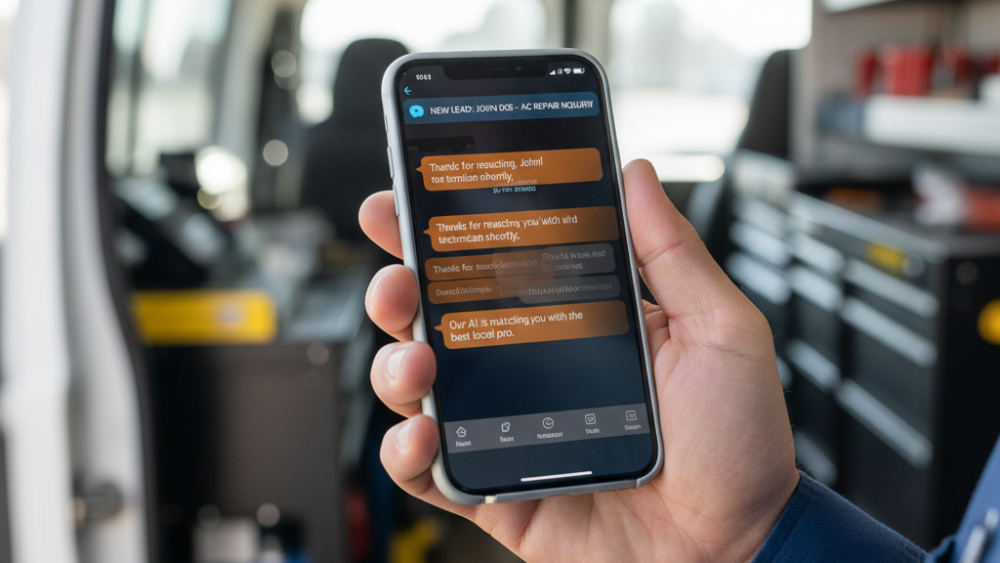
An AI agent is a program designed to perform specific tasks like responding to inquiries, handling phone calls, or qualifying leads without human intervention, using natural language processing to maintain conversations that feel human. Response time is the single biggest factor in lead conversion, yet most businesses take hours or days to follow up because they're juggling multiple leads, serving existing customers, and managing daily operations.
Launch CRM's AI Agent (Rocket) responds to every lead in under 60 seconds via text, email, or phone, answers common questions using past conversation history, and books appointments directly into your calendar. This speed advantage transforms conversion rates because prospects are still engaged with your business when the first response arrives. They haven't moved on to the next search result or forgotten why they inquired.
The AI handles phone calls with natural conversation, can answer frequently asked questions, route complex inquiries to the right team member, and post positive reviews automatically after successful interactions. When a call comes in, Rocket greets the caller, determines their need, provides information from your knowledge base, and either books them into an available slot or escalates to a human team member when the situation requires judgment.
Context memory is what separates basic chatbots from effective AI agents. Platforms that let AI use past conversations deliver more accurate, personalized responses because they reference previous interactions instead of treating every conversation as brand new. When a returning customer asks a follow-up question, the AI already knows their purchase history, previous concerns, and communication preferences, much like the autonomous AI agents designed for business operations.
Automation works best when it feels human. The AI maintains your brand voice and escalates to a real person when the conversation requires judgment or empathy. You define the guardrails: which questions the AI handles automatically and which scenarios trigger immediate human involvement. This balance lets you provide instant responses while ensuring complex situations get personal attention.
Businesses using AI-powered lead response see 3-5x higher conversion rates compared to manual follow-up processes. The difference comes from consistency and speed. Human teams have great days and exhausting days; AI agents deliver the same experience at 2 PM on a Tuesday and 11 PM on a Saturday. They never forget to follow up, never miss a call, and never let a hot lead go cold.
Building Sales Funnels, Managing Campaigns, and Measuring Results
A sales funnel illustrates the customer journey from awareness through consideration to purchase, with each stage requiring different messaging and tactics to move prospects toward a buying decision. Campaign management involves planning, executing, tracking, and analyzing marketing efforts across channels to maximize return on investment. Most businesses struggle because the tools for building funnels live separately from the tools for managing campaigns and the systems for measuring results.
The best platforms let you build complete funnels (landing pages, opt-in forms, email sequences, SMS follow-up, and checkout pages) without coding or external tools. When someone clicks your ad, they land on a page you built in the same system that will send their follow-up emails and process their payment. Every piece of the customer journey lives in one workflow.
Launch CRM includes funnel builders, membership sites, webinars, forms and surveys, email marketing, SMS marketing, pipelines, and checkout pages all in one system. You can create a webinar funnel that captures registrations, sends reminder emails and texts, hosts the presentation, follows up with attendees and no-shows differently, and tracks who purchased your offer. All without leaving the platform or connecting external services.
Reporting must connect ad spend to actual revenue. The platform should show which campaigns generated leads, how many converted to appointments, and how much revenue resulted. Generic analytics tools tell you how many people clicked or submitted forms, but they can't tell you if those leads became paying customers unless every system shares the same database.
Launch CRM's reporting dashboard tracks lead sources, conversion rates, campaign performance, team activity, and revenue attribution in real time. You see which advertising campaigns produced profitable customers, not just which ones generated the most clicks. This visibility lets you shift budget from campaigns that look good in isolation but don't actually drive revenue to campaigns that deliver positive return on investment.
Reputation management closes the loop. After a successful sale, the AI can automatically request a review, post it to Google and other platforms, and use positive feedback in future marketing. This automation happens because the system knows when a sale closed, when the service was delivered, and which customers are most likely to leave enthusiastic reviews based on their interaction history.
Integrated platforms provide the complete picture competitors miss when data lives in separate systems. You understand the true cost of customer acquisition because you see ad spend, follow-up costs, and sales team time in one view. This comprehensive perspective separates businesses that scale profitably from those that generate lots of activity without corresponding revenue growth.
Choosing the Right Platform for Your Business
The right platform matches your actual workflows and growth stage, not the feature list that looks most impressive in a sales presentation. Small to medium-sized businesses benefit most from all-in-one systems that eliminate the complexity and cost of managing multiple vendors. Enterprise businesses with dedicated IT teams might tolerate integrating separate best-of-breed tools, but most growing businesses need systems that work immediately.
Not every business needs every feature. A service business that books appointments has different requirements than an e-commerce store shipping physical products. Consider whether you need membership site capabilities, webinar hosting, or advanced pipeline customization before paying for enterprise features you'll never configure.
The wrong approach is choosing based on features alone without considering whether those features actually work together or require constant manual intervention. Many platforms advertise impressive capabilities but bury the disclaimer that connecting them requires Zapier subscriptions, developer time, or workarounds that break with software updates.
Test lead response workflows end-to-end. Submit a test lead and see how quickly the system responds, whether follow-up is automatic, and if appointment booking works without human touch. This real-world test reveals more about platform effectiveness than any feature comparison chart. If the demo requires the salesperson to manually trigger each step, that's what your team will do in production.
Launch CRM serves businesses nationwide that rely on lead generation, customer communication, and systematic follow-up to grow revenue. Industries that benefit most include home services, healthcare practices, professional services, real estate teams, and local retail businesses where converting inquiries quickly determines success. The platform consolidates tools these businesses previously managed separately.
Call us at 760-253-1477 to see how consolidating your advertising, CRM, and AI tools into one platform reduces costs while improving conversion rates.
Key Platform Features at a Glance
| Feature | Benefit | Impact |
|---|---|---|
| AI lead response under 60 seconds | Contacts prospects while they're still engaged | 7x higher conversion rate |
| Unified CRM and campaign management | Eliminates manual data transfers between systems | No leads fall through cracks |
| Native AI content creation | Generates copy directly in email and funnel builders | 60-80% faster production |
| Multi-channel automation | Coordinates text, email, phone, and chat from one system | Consistent customer experience |
| Revenue attribution reporting | Connects ad spend to actual sales | True ROI visibility |
| Tool consolidation | Replaces 5-15 separate subscriptions | 40-70% cost reduction |
Frequently asked questions
What are the different types of online advertising platforms?
Search advertising platforms like Google Ads and Microsoft Advertising place text and shopping ads in search results based on keyword targeting. Social media advertising platforms including Facebook, Instagram, and LinkedIn deliver image and video ads to audiences defined by demographics, interests, and behaviors. Display advertising platforms and networks place banner and video ads across thousands of websites using contextual or audience targeting. All-in-one marketing platforms combine advertising management with CRM, email marketing, automation, and AI-powered follow-up in a single system, eliminating the integration challenges of separate tools.
How do online advertising platforms measure success?
Cost per click shows how much you pay each time someone clicks your ad, indicating efficiency of targeting and creative execution. Conversion rate measures the percentage of ad clicks that result in desired actions like form submissions, calls, or purchases, typically ranging from 2-10% depending on industry. Return on ad spend calculates revenue generated per dollar spent on advertising, the ultimate measure of campaign profitability. Integrated platforms track the complete journey from ad click through lead response, appointment booking, and final sale, revealing true ROI that isolated advertising platforms cannot measure.
What are the key features to look for in an online advertising platform?
Native CRM integration that automatically captures lead data without manual export and import steps ensures no lead falls through the cracks. AI-powered lead response that contacts prospects in under 60 seconds and handles qualification and appointment booking automatically converts 3-5x more inquiries than manual processes. Unified reporting connects ad spend to actual revenue, showing which campaigns drive profitable customer acquisition rather than just generating clicks. Multi-channel campaign management coordinates email, SMS, web chat, social media, and phone follow-up from one system. Built-in content creation tools generate ad copy, landing pages, and email sequences using AI trained on your brand voice.
How can small businesses use online advertising platforms effectively?
Start with clear conversion goals (appointment bookings, form submissions, or phone calls) and build campaigns backward from those outcomes rather than optimizing for vanity metrics. Use all-in-one platforms to avoid the $300-$1,200 monthly cost and complexity of integrating separate advertising, CRM, and communication tools. Implement AI-powered lead response to compete with larger competitors on speed and consistency without hiring additional staff. Focus on channels where your customers actually spend time rather than trying to maintain presence everywhere. Test small with $500-$1,000 budgets, measure rigorously using revenue attribution, and scale only the campaigns that deliver positive return on ad spend.
What is the future of online advertising platforms with AI integration?
AI agents will handle increasingly complex customer conversations, moving beyond scripted responses to genuine problem-solving and consultation that feels indistinguishable from human support. Generative AI platforms will create, test, and optimize ad creative automatically based on performance data, reducing human workload by 70-80% while improving results. Predictive analytics will identify which leads are most likely to convert based on behavior patterns and automatically adjust follow-up intensity and channel mix. The line between advertising platforms and business operating systems will disappear as AI connects every customer touchpoint into unified workflows that span from initial ad impression through repeat purchase.
How can I compare platforms that let AI use past conversations to answer customers?
Test whether the AI references previous interactions when you return to a conversation. Basic chatbots start fresh every time while advanced systems maintain context across days or weeks. Ask the platform vendor if conversation history lives in isolated sessions or connects across email, text, phone, and web chat channels into a unified timeline. Look for AI that learns from successful conversations and applies those patterns to future customer interactions automatically, improving over time. Launch CRM's Conversation AI maintains context across all channels and uses past exchanges to deliver personalized, accurate responses that reflect the complete customer relationship.
Does AI-assisted content creation typically plug into campaign management platforms or does it always require manual export and import steps?
Most external AI content tools operate separately and force you to copy-paste outputs into your campaign management system manually, introducing errors and delays at every transfer. Native AI content creation built into your platform generates copy directly inside email builders, landing page editors, and ad creation workflows, cutting production time by 60-80%. Launch CRM's Content AI works within the same system where you build funnels and send campaigns, eliminating all export-import steps and maintaining consistency. Integrated AI accesses your brand guidelines, past campaign performance, and customer data to generate more relevant, effective content than standalone tools that lack business context.
How does Launch CRM help with email and text marketing?
Launch CRM includes native email marketing and SMS marketing tools that share the same contact database as your CRM and advertising campaigns. When a lead comes in from an ad, they automatically enter email and text sequences without manual list uploads or exports. The AI can generate email subject lines, message copy, and sequences based on your brand voice and past performance. Delivery tracking shows who opened, clicked, and responded, with all activity logged in the contact record alongside phone calls, web chats, and other interactions. This integration means your email and text marketing responds automatically to customer behavior across all channels.
Conclusion
Online advertising platforms have evolved from simple campaign management tools into comprehensive systems that connect every stage of the customer journey. The most effective platforms combine advertising capabilities with CRM, communication tools, and AI automation in one unified system, eliminating the cost and complexity of managing separate subscriptions. Businesses that consolidate onto integrated platforms reduce software costs by 40-70%, respond to leads 7x faster, and convert significantly more inquiries into paying customers. Launch CRM delivers this complete solution with AI-powered lead response, native content creation, automated follow-up across all channels, and reporting that connects ad spend to actual revenue. Stop juggling disconnected tools and start growing your business with a platform designed for efficiency and results. Call us at 760-253-1477 to discover how consolidation improves both your bottom line and your team's daily experience.