
Conversational AI Models That Work for Carlsbad Business
Last updated September 19, 2026
Conversational AI is a type of artificial intelligence that simulates human conversation using natural language processing and machine learning, enabling computers to understand, interpret, and generate human language in real time across email, text, phone, and chat channels. Unlike basic scripted chatbots, these models understand context, learn from interactions, and generate responses that feel natural to customers.
Table of contents
- What Conversational AI Models Actually Are
- How Conversational AI Processes Customer Communications
- Why Conversational AI Transforms Customer Service
- How Conversational AI Automates Lead Response and Qualification
- How AI Automates Customer Interactions
- How to Improve Lead Response Time
- How the AI Agent Handles Phone Calls and Appointments
- Managing Email Marketing and Text Campaigns with Conversational AI
- Building Sales Funnels with Integrated Conversational AI
- Reputation Management and Review Collection Through AI
- What Kind of Reporting Does Launch CRM Offer
- When Conversational AI Is Not the Right Solution
- Getting Started with Conversational AI in Your Carlsbad Business
- Moving Forward with AI-Powered Business Operations
- Frequently asked questions
What Conversational AI Models Actually Are
Conversational AI works by using a combination of natural language processing (NLP), foundation models, and machine learning (ML) to interpret incoming messages, determine customer intent, and generate appropriate responses. Foundation models are large AI models trained on vast datasets, providing the underlying capabilities for generative AI that can create contextual, personalized responses rather than following rigid scripts.
Natural language processing is a field of AI that enables computers to understand, interpret, and generate human language, allowing conversational AI to break down customer messages into intent and entities across all communication channels. NLP recognizes that "book me in tomorrow morning" and "do you have any availability on Tuesday around 9?" are both appointment requests, and that "ASAP" signals higher priority than "when you get a chance."
A chatbot is a computer program designed to simulate conversation with human users, often representing a more basic form of conversational AI that follows predetermined decision trees. Advanced conversational AI models learn from each interaction and handle complex, multi-turn conversations. A basic chatbot breaks when someone types "I'd like to reschedule my Tuesday appointment" instead of selecting "Reschedule" from a menu. Conversational AI understands both.
Machine learning is a type of AI that allows systems to learn from data without explicit programming, improving conversational AI over time by analyzing patterns in customer conversations and adapting to new queries. Every resolved conversation teaches the system something about your business, your customers, and your communication style.
| Feature | Basic Chatbot | Conversational AI Model |
|---|---|---|
| Understanding | Keyword matching | Intent recognition with context |
| Learning | Fixed scripts | Improves from interactions |
| Response Style | Predetermined paths | Dynamic, natural responses |
| Context Memory | None or limited | Remembers conversation history |
| Channel Support | Usually single channel | Omnichannel (email, SMS, voice, chat) |
How Conversational AI Processes Customer Communications
Conversational AI systems are trained on large amounts of data, such as text and speech, to understand and process human language patterns including how customers phrase questions, express problems, and respond to solutions. This training teaches the model that "I haven't received my order" and "Where's my package?" and "It's been three days and nothing arrived" all express the same underlying concern.
The process begins when a customer message arrives through any channel and the NLP engine analyzes the text or transcribed speech to identify key entities like product names, dates, or complaint categories. The system extracts structured data from unstructured conversation: "I want to book a massage next Thursday at 2pm" becomes appointment_type: massage, date: 2026-09-26, time: 14:00.
Context management allows conversational AI to remember previous interactions, track where a customer is in a sales funnel or support journey, and reference past purchases or preferences to deliver personalized responses. A customer says "I'd like to order the same thing as last time." The system knows what "last time" means because it maintains conversation history and CRM integration.
Some platforms optimize for smaller, fine-tuned models like Llama 8B to reduce latency and inference costs, ensuring customers receive responses in seconds rather than minutes. This efficiency matters because a five-second delay feels acceptable to most customers, but a thirty-second wait feels broken.
Why Conversational AI Transforms Customer Service
Customer service is the support provided to customers before, during, and after purchasing a product or service, and it becomes significantly more efficient when conversational AI automates repetitive inquiries about hours, pricing, order status, and account information. The technology handles questions that don't need human creativity—the ones with factual, database-driven answers.
Benefits of conversational AI include reducing costs, increasing productivity and operational efficiency through automation, and delivering better customer experience, engagement, and satisfaction. A human support team of ten people might handle 200 conversations per day. Conversational AI handles 200 conversations per hour with no fatigue, sick days, or inconsistent answers between team members.
A virtual assistant is an AI-powered application that can understand natural language voice commands and complete tasks for a user, such as booking appointments, updating contact information, or processing simple transactions without human intervention. These systems function as common applications of conversational AI that remove friction from routine interactions.
Conversational AI can automate tasks currently performed by humans, reducing human errors and costs, and can provide personalized, 24/7 assistance by remembering customer preferences. A returning customer reaches out and the system already knows their name, what they bought, what problems they've reported before, and whether they prefer email or text.
Businesses reduce human errors in data entry, appointment scheduling, and lead routing because AI systems apply consistent rules and automatically log every interaction into the CRM with accurate timestamps and conversation summaries. A human receptionist might forget to log a phone call or mistype an appointment time. The AI logs everything perfectly every time.
How Conversational AI Automates Lead Response and Qualification
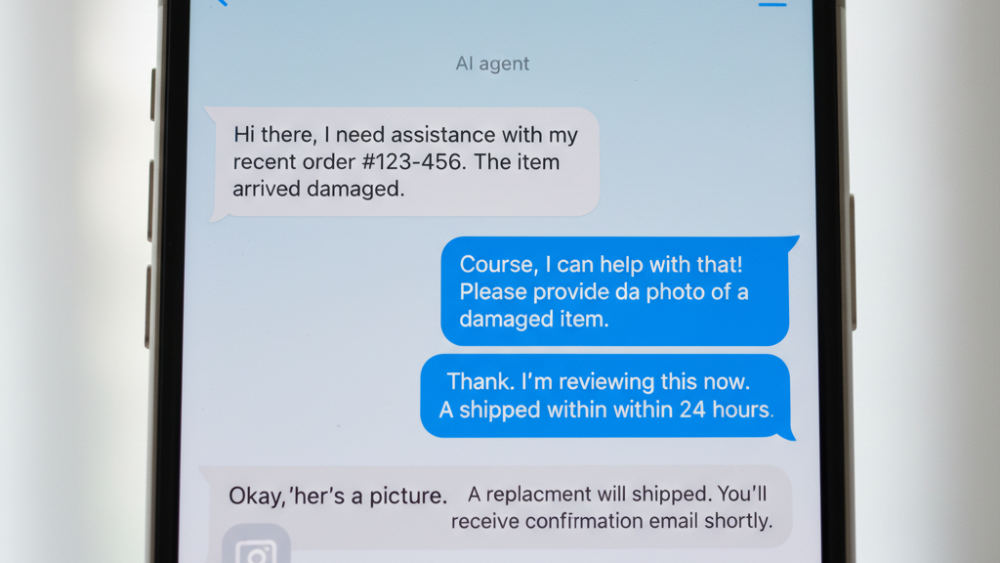
Lead qualification is the process of determining if a prospective customer is likely to purchase a product or service, and it becomes measurably faster when conversational AI responds to new inquiries within seconds and asks qualifying questions about budget, timeline, and needs. The difference between responding in one minute versus responding the next business day can determine whether you win or lose the deal.
Launch CRM's AI Agent (Rocket) responds to leads in under 60 seconds across email, SMS, and phone channels, automatically asking qualification questions, booking appointments with available sales staff, and updating pipeline status in real time. The system monitors every lead capture point and engages immediately with personalized responses that reference the specific service or product the prospect asked about.
Integration with CRM platforms means conversational AI automatically logs every interaction, scores leads based on engagement and fit, triggers follow-up sequences, and alerts human team members when escalation is needed. CRM (Customer Relationship Management) is software used to manage a company's interactions with current and potential customers, which conversational AI can integrate with to streamline operations.
The system tags leads with data points like "requested pricing," "mentioned competitor," "appointment scheduled," or "mentioned budget of $5,000," giving your sales team context before they ever pick up the phone. A lead who fills out a form at 10pm gets a response at 10:00:15pm, not 9am the next day when they've already moved on to your competitor.
How AI Automates Customer Interactions
AI automates customer interactions by monitoring all incoming messages across web chat, SMS, email, social DMs, and phone, then responding instantly with answers pulled from your knowledge base, booking systems, and CRM data. The unified platform approach consolidates these channels into one interface where AI handles routine conversations 24/7.
The automation covers missed call text back, GMB messaging that responds to Google Business Profile inquiries, and workflow triggers that send follow-up emails or SMS based on customer actions. Someone calls after hours and receives a text within seconds offering to schedule a callback, answer their question via text, or book an appointment directly through a link.
Voice AI handles inbound phone calls by answering in natural language, understanding customer requests through speech recognition, transferring to the right department, and booking appointments by checking calendar availability in real time. The voice system doesn't sound robotic because it uses modern speech synthesis that matches natural pacing and conversational flow.
This level of automation works across the entire customer lifecycle, from first website visit and lead capture forms through nurturing sequences and appointment reminders to post-purchase review requests and support tickets. All automated, all personalized, all logged in the CRM.
How to Improve Lead Response Time
You can improve lead response time by implementing conversational AI that monitors your lead capture forms, web chat, phone lines, and email inbox 24/7, responding within 60 seconds with personalized messages that acknowledge the inquiry. This advanced AI assistant approach treats every new lead as an immediate priority rather than an item in a queue waiting for a human to process it.
The system automatically prioritizes leads based on source, behavior signals like pages viewed or time on site, and responses to qualification questions, ensuring your sales team focuses on the hottest prospects first. A lead who visited your pricing page three times, filled out a form, and answered "this week" to "When are you looking to get started?" gets flagged as hot and routed immediately.
Immediate response matters because research shows contacting a lead within five minutes makes them 21 times more likely to convert compared to waiting 30 minutes, and conversational AI eliminates the delays caused by manual lead review and assignment. Human processing introduces delay at every step. AI does all of that in under a second.
How the AI Agent Handles Phone Calls and Appointments
The AI agent handles phone calls by answering with a natural voice, listening to customer requests through speech recognition, and routing calls to the appropriate team member or department based on intent and urgency. Launch CRM's Voice AI operates 24/7, ensuring no call goes unanswered even during holidays, nights, and weekends.
Appointment booking happens automatically when the AI checks your team's calendar availability in real time, offers the customer available time slots, confirms the booking, and sends calendar invites and SMS reminders to both parties. The conversation sounds natural: "I have Tuesday at 2pm, Wednesday at 10am, or Thursday at 3pm available. Which works best for you?"
The system handles common requests like rescheduling by asking for the customer's name or phone number, locating the existing appointment, canceling it, and immediately offering new time slots without human involvement. This automation prevents the frustrating back-and-forth that happens when rescheduling requires leaving messages and playing phone tag.
Every phone interaction is transcribed, logged in the CRM with sentiment analysis and key points extracted, and routed to the appropriate workflow. You can review full transcripts of every call, see which questions the AI answered successfully, and identify patterns that suggest gaps in the knowledge base.
Managing Email Marketing and Text Campaigns with Conversational AI
Launch CRM helps with email and text marketing by using conversational AI to personalize message content based on customer behavior, automatically segment audiences by engagement level and lifecycle stage, and trigger follow-up sequences when recipients reply or click. The platform combines email marketing, SMS marketing, and AI responses into one workflow.
Conversational AI monitors replies to your email and text campaigns, identifies questions or objections, and responds with relevant answers pulled from your knowledge base. Someone responds to a discount offer asking "Does this apply to service packages?" or "Can I use this next month?" The system recognizes the intent and replies immediately with the correct policy details.
The system can also generate marketing content using Content AI, which drafts email copy, SMS messages, and social posts based on your brand voice and campaign goals, then schedules them across channels at optimal send times. This content generation considers past campaign performance and customer engagement history to craft messages more likely to drive action.
Two-way SMS conversations become scalable when AI handles common replies like "Tell me more," "What's the price?" or "Book me an appointment," qualifying interest and moving leads through the pipeline while escalating complex questions to human team members. Text messaging delivers higher open rates than email, and conversational AI ensures you capitalize on that attention window.
Building Sales Funnels with Integrated Conversational AI
Launch CRM helps you build sales funnels by providing drag-and-drop funnel builders, landing pages, forms, and membership areas, all connected to conversational AI that engages visitors in real time through web chat. Funnel AI optimizes conversion paths by testing different sequences and recommending improvements based on drop-off points.
The platform integrates conversational AI into every funnel stage, from the initial opt-in page where chat prompts visitors to ask questions through nurture sequences where AI responds to email replies to checkout where it handles objections. A visitor who hesitates at the pricing page might see a chat message offering to explain payment plans or schedule a consultation.
Sales pipeline management becomes automated as conversational AI moves leads through stages based on engagement signals, qualification answers, and behavior like webinar attendance or pricing page visits. The system assigns lead scores based on factors like response speed, questions asked, budget mentioned, and timeline urgency, ensuring your team focuses energy on prospects most likely to close.
This approach works for businesses in Carlsbad and nationwide because the AI operates across time zones and outside business hours, ensuring international leads and night-shift workers receive immediate engagement. A lead who discovers your business at 11pm on Saturday gets the same instant, personalized attention as one who submits a form at 10am on Tuesday.
Reputation Management and Review Collection Through AI
You can manage customer reviews with Launch CRM by using Reviews AI to automatically request reviews after appointments or purchases, monitor review sites for new feedback, and respond to reviews with personalized messages that acknowledge specific comments. The AI agent posts reviews automatically when integrated with your Google Business Profile and other platforms.
The system triggers review requests through SMS or email at optimal times, typically within 24 hours of a positive interaction when satisfaction is highest, and customizes the message based on the service received and customer relationship history. A customer who completed their third appointment gets a different message than a first-time buyer.
Review monitoring alerts your team when negative feedback appears, suggesting response templates that address the concern professionally while the situation is still fresh. Quick, empathetic responses to negative reviews can often turn a detractor into a promoter, and the AI ensures you never miss a critical comment buried on a secondary review site.
This reputation management capability saves hours each week that staff would spend manually tracking review sites, crafting responses, and remembering to ask happy customers for testimonials. The system also identifies patterns in negative feedback so you can address root causes rather than just managing symptoms.
What Kind of Reporting Does Launch CRM Offer
Launch CRM offers a reporting dashboard that tracks conversation volume by channel, lead response times, conversion rates by traffic source, appointment booking rates, and AI agent performance metrics including accuracy, escalation frequency, and customer satisfaction scores. Reports are available in real time with customizable date ranges and filters.
You can measure the effectiveness of conversational AI by monitoring conversation completion rates, average response time, lead-to-appointment conversion, and revenue attributed to AI-handled conversations versus human-only interactions. These metrics reveal where the AI adds the most value and where additional training or human intervention improves outcomes.
The platform also reports on email marketing performance including open rates, click rates, reply rates, and unsubscribes; SMS campaign metrics; sales funnel conversion at each stage; and pipeline velocity showing how quickly leads move from first contact to closed deal. Understanding which channels and messages drive engagement allows you to allocate budget and effort to the highest-performing tactics.
Advanced reporting includes attribution tracking that shows which marketing channels and campaigns drive the highest-quality leads, lifetime value analysis by customer segment, and ROI calculations. You can see that conversational AI contributed to 40 percent of your appointments last month and those leads closed at 1.5 times the rate of manually handled inquiries.
When Conversational AI Is Not the Right Solution
Conversational AI models may struggle with highly complex, nuanced inquiries requiring deep industry expertise, legal judgment, or crisis management where empathy and human discretion are essential. A customer dealing with a billing dispute involving contract interpretation or someone experiencing an urgent service failure needs the judgment and authority a human representative provides.
Security and privacy considerations require careful implementation because conversational AI handles sensitive customer data including contact information, purchase history, and payment details, necessitating encryption, access controls, and compliance with regulations like GDPR and CCPA. Businesses in regulated industries like healthcare, finance, or legal services must ensure their AI implementation meets industry-specific standards.
Businesses with extremely limited budgets or very small customer bases may find the setup effort outweighs the benefits until inquiry volume reaches the point where manual response becomes a bottleneck, typically around 50 to 100 conversations per week. A solo consultant with five client inquiries per week gains less from automation than a service business fielding 200 leads monthly.
The technology requires ongoing monitoring and refinement because customer language evolves, new products launch, and policies change. You cannot simply set up conversational AI and ignore it. Regular review of unresolved conversations identifies knowledge gaps and training opportunities that keep the system effective.
Getting Started with Conversational AI in Your Carlsbad Business
The launch process begins by consolidating your current tools into Launch CRM's unified platform where conversational AI can access all data and systems through one interface at 3193 Lionshead Ave, Carlsbad, CA 92010. This consolidation eliminates the fragile chains of integrations between separate software products that break when one vendor updates their API.
You'll configure the AI agent by providing your knowledge base, setting qualification questions for leads, connecting your calendar, and defining escalation rules for when conversations should route to a human team member. The more specific and comprehensive your initial knowledge base, the more accurately the AI will respond from day one.
Training involves reviewing initial conversations the AI handles, correcting misunderstandings, adding new response templates for common questions the system didn't anticipate, and adjusting tone to match your brand voice across all channels. Some businesses sound professional and corporate, others casual and friendly. The AI adapts to reflect how you want your brand to sound.
Launch CRM's all-in-one approach means you're not juggling API connections between separate tools; the AI employee suite works natively with the CRM, marketing automation, sales funnels, and reporting dashboard. You avoid the version conflicts, authentication headaches, and data sync delays that plague businesses trying to connect best-of-breed tools through third-party integration platforms.
For businesses frustrated with multiple software subscriptions and slow lead response, this consolidation typically saves $500 to $2,000 per month while improving conversion rates through instant engagement and 24/7 availability. You eliminate separate bills for your CRM, email marketing platform, SMS service, appointment scheduler, chatbot tool, and landing page builder, replacing six or more subscriptions with one platform.
Interested in exploring generative AI platforms that power modern conversational systems? Launch Commerce offers comprehensive solutions for businesses looking to integrate these technologies effectively.
Moving Forward with AI-Powered Business Operations
Conversational AI models have evolved from simple scripted chatbots into sophisticated systems that understand context, learn from interactions, and integrate deeply with business operations from lead capture through customer support and reputation management. The distinction between basic rule-based bots and true conversational AI matters because only the latter can handle the unpredictable, multi-turn conversations real customers have.
The competitive advantage for businesses in Carlsbad and beyond comes from speed, responding in under 60 seconds instead of hours, and consistency in delivering personalized engagement across email, text, phone, and chat regardless of time zone or business hours. Your competitors who still rely on human-only response during business hours lose every lead who contacts them at 8pm.
Launch CRM delivers this through an all-in-one platform that replaces the complexity of connecting separate tools with a unified system where conversational AI, marketing automation, sales funnels, and customer management work together seamlessly. The platform's foundation models, trained on vast datasets and continuously updated, power natural language understanding that improves with every conversation.
If you're ready to consolidate your business tools, improve lead response times, and automate customer interactions with AI that handles phone calls, books appointments, and manages reviews around the clock, call us at 760-253-1477 to discuss how our platform fits your specific needs. Whether you're a service business losing leads to slow response times or a growing company that needs automation to scale without proportional staff increases, conversational AI can transform how you engage customers. You can also explore detailed AI pricing to understand the investment.
Frequently asked questions
What are conversational AI models?
Conversational AI models are artificial intelligence systems that simulate human conversation by combining natural language processing, machine learning, and foundation models trained on large datasets of text and speech. Unlike basic scripted chatbots, these models understand context, learn from interactions, and generate natural-sounding responses across email, SMS, phone, and chat channels. They power virtual assistants, customer service automation, lead qualification systems, and voice agents that handle complex, multi-turn conversations without following rigid scripts.
How do conversational AI models improve customer service?
Conversational AI improves customer service by providing 24/7 availability, instant response times, and consistent answers to common inquiries about hours, pricing, order status, and account information. The technology reduces support costs by automating repetitive tasks, freeing human agents to focus on complex issues requiring empathy and judgment. Systems remember customer preferences and history across all channels, delivering personalized assistance and eliminating the frustration of customers repeating information when they switch from chat to email to phone.
What conversational AI features help with lead response?
Lead response features include instant acknowledgment of new inquiries within 60 seconds, automated qualification questions about budget, timeline, and needs, and automatic appointment booking with available sales staff. The AI monitors all lead capture channels simultaneously, ensuring no lead falls through the cracks due to manual review delays or after-hours submission. CRM integration means every conversation is logged with lead scoring, pipeline updates, and follow-up task creation, while hot leads receive immediate routing to sales reps and cooler leads enter nurture sequences.
What is the difference between a chatbot and a conversational AI model?
A chatbot is a computer program designed to simulate conversation with human users, often following predetermined decision trees and keyword-triggered responses that break down when customers phrase questions unpredictably. Conversational AI models use natural language processing and machine learning to understand intent and context, generating dynamic responses based on training data rather than scripted rules, and learning from each interaction to improve over time. Basic chatbots can't remember previous conversations or adapt to individual customers, while conversational AI maintains context across multi-turn dialogues and personalizes responses based on customer history, preferences, and behavior.
How do conversational AI models handle complex queries and context?
Models handle complexity by using natural language processing to break down customer messages into intent and entities, understanding not just the words but the meaning, emotion, and context behind them. Context management allows the system to remember conversation history, track where a customer is in their journey, reference past purchases or support tickets, and maintain coherence across multi-turn dialogues and multiple sessions. If a query exceeds the AI's training or requires human judgment, escalation rules route the conversation to a human agent along with the full transcript and context, ensuring a seamless handoff without the customer repeating information.
What are the security and privacy considerations for implementing conversational AI?
Security considerations include encryption of all conversation data in transit and at rest, access controls limiting which team members can view sensitive conversations, and audit logs tracking who accessed customer information and when. Privacy compliance requires adherence to regulations like GDPR and CCPA, including customer consent for data collection, the ability to export or delete customer data on request, and transparency about how AI uses and stores conversation transcripts. Businesses must also establish data retention policies, define what types of information the AI can request and store, and implement safeguards preventing the AI from sharing one customer's data with another customer.
How can conversational AI be scaled for a growing business?
Scaling requires monitoring response latency as conversation volume increases, optimizing for fine-tuned models that reduce inference costs, and adding infrastructure capacity before performance degrades during traffic spikes. The knowledge base must expand as you launch new products, enter new markets, and encounter new customer questions, requiring regular review of unresolved conversations to identify gaps and training opportunities. Integration depth increases with business complexity, connecting to CRM systems, inventory databases, payment processors, shipping APIs, and appointment schedulers so the AI can complete transactions and resolve inquiries without human intervention.
What metrics should be used to evaluate the effectiveness of conversational AI?
Key metrics include conversation completion rate (percentage resolved without human escalation), average response time, customer satisfaction scores from post-conversation surveys, and lead-to-appointment or lead-to-purchase conversion rates. Cost metrics compare the expense of the AI system against the labor cost of handling the same conversation volume manually, while productivity metrics measure how many conversations each human agent handles after AI filters out routine inquiries. Revenue attribution tracks which AI-handled conversations result in bookings or purchases, lifetime value of customers acquired through AI channels versus human-only channels, and ROI calculated as revenue increase minus implementation and operating costs.
Can conversational AI models integrate with existing business software?
Conversational AI models can integrate with CRM platforms, email marketing tools, SMS services, appointment schedulers, payment processors, inventory systems, and support ticket platforms through APIs and webhooks. Launch CRM eliminates integration complexity by providing an all-in-one platform where conversational AI, customer management, marketing automation, sales funnels, and business tools work natively together without connecting separate software. This consolidation approach replaces the fragile chain of connections between third-party services that break when one vendor changes their system, reducing maintenance burden and ensuring the AI always has access to current customer data.